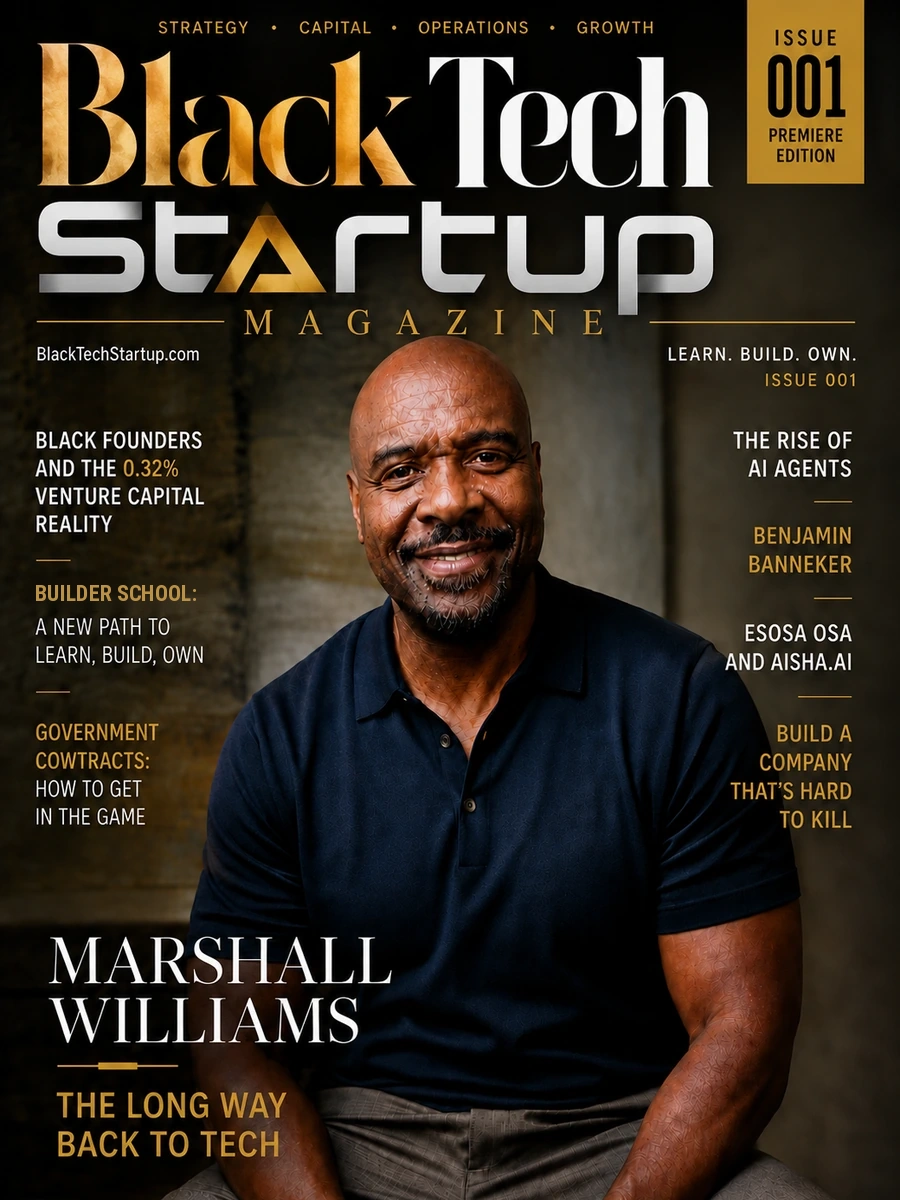
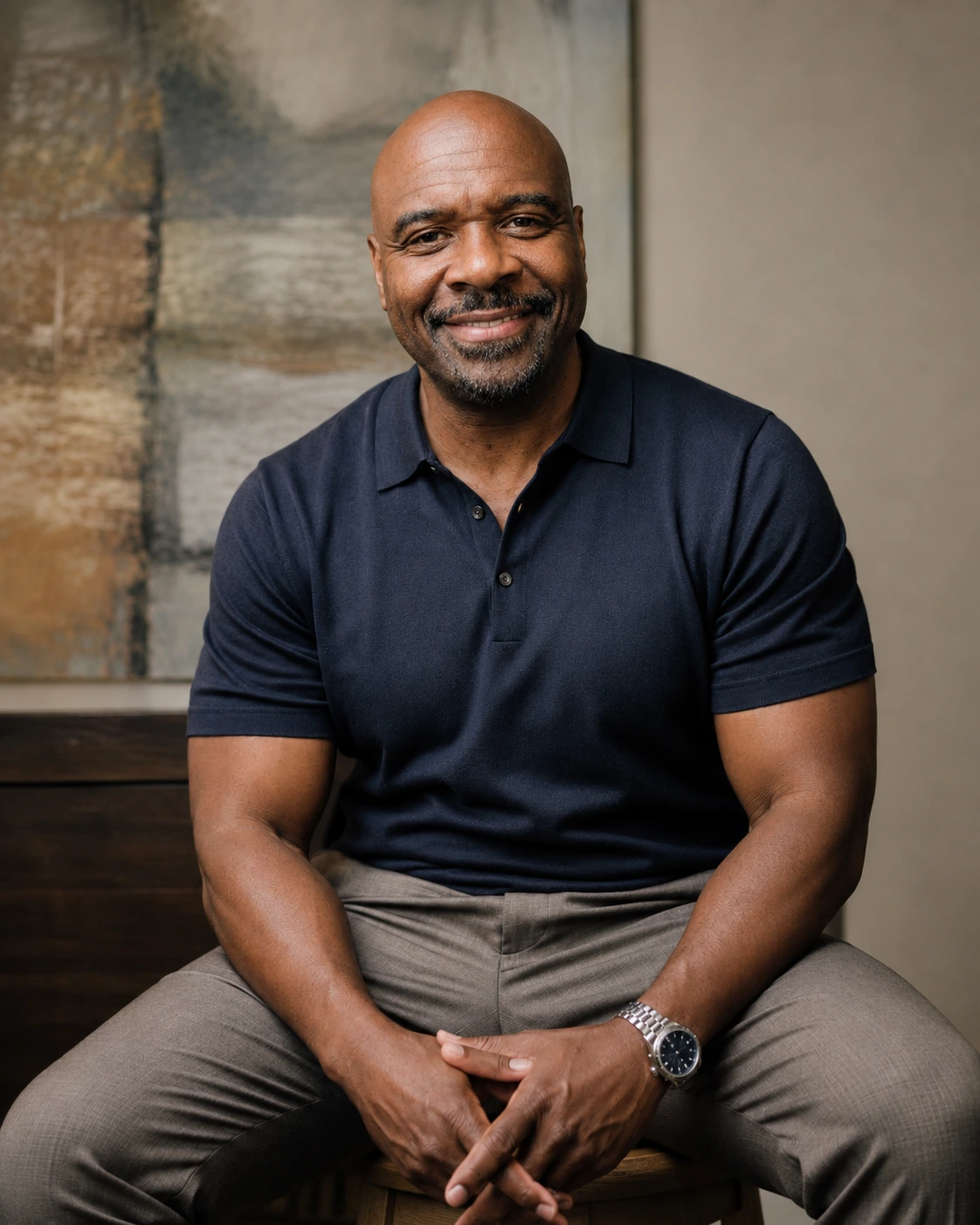
THE LONG WAY BACK TO TECH
Marshall Williams thought his serious technology days were over. Then AI and a comment from his 12 year old son pulled him back in.
Marshall Williams was getting ChatGPT wrong. His 12 year old son told him so. Williams had been treating the new chatbot the way plenty of people did at first: type in a question, get an answer, move on.
“Dad, you’re using it wrong,” Williams remembers his son telling him. “Talk to it like a human.”
So he did. The conversations got longer. Then came the experiments. Then the reading. Before long, Williams was spending hours throughout the day trying to understand what large language models could do and, eventually, what he could build with them.
Things broke. A lot of things broke. Website functions. App ideas. Pieces of projects that seemed as though they should work until they didn’t. There were nights when Williams went to bed frustrated and came back the next day to try again.
The feeling was familiar. He had been here before. Not with artificial intelligence, but with another technology that seemed to be rearranging ordinary life while people were still figuring out what it was for.
He had lived through the internet boom. More importantly, he had tried to build businesses inside it. And once already, a technology giant had changed the ground beneath his feet.
This time, Williams wanted to be ready.
Before the software, there were six lawns and a kid who liked making his own money.
His first business was considerably less sophisticated. It involved a lawn mower. Williams was 12 when a friend of his father’s gave him a yard to cut. He got paid and immediately did the math.
“What if I can get more yards?” he remembers thinking. “That equals more money.” He started knocking on doors around his neighborhood. One lawn became six.
There was one complication: Williams was allergic to freshly cut grass. He tried to save some of what he earned. That plan did not hold up particularly well against the spending priorities of a 12 year old. “I was looking at candy,” he says. The candy won. The instinct didn’t.
Williams would spend much of his adult life doing some version of what he had done with those lawns: spot an opportunity, figure out how it worked, then ask whether he could make it bigger.
Technology entered the picture gradually. Around 2000, he began experimenting with basic Microsoft publishing software. Later came Dreamweaver and websites. There was no computer science degree behind it, no formal path into technology. Williams learned because there was something he wanted to make.
By around 2007, he and two partners had turned some of that knowledge into a local internet business in Fayetteville. Lawyers and doctors paid a flat rate to appear in the professional directories; better placement cost extra. The company also offered web design and local SEO.
FayettevilleNow.com was broader: local news, events, classifieds, dating, live chat, pets, jokes and other community material.
Why start with doctors and lawyers? Williams laughs. “They had the money to spend.” The plan was to work through local industries one by one. FayettevillePlumbers.com was supposed to be next.
Business was getting easier to sell. There were two partners and a salesman. Williams remembers revenue increasing month after month. Prospective clients could be shown something tangible: search for an important local term and see where the directory appeared. He says existing doctor and lawyer clients told them they were getting leads.
And the company was not relying entirely on the internet to make itself known. It had put up a large static billboard along one of Fayetteville’s heavily traveled streets. People could encounter the directories in search and then drive past the name again on the way home.
Williams felt they were gaining momentum.
Then he noticed Google moving onto the page.
The rankings stayed. The economics around them changed.
Google Maps had existed since 2005. But by 2008, Google was giving its own local business results far more prominent real estate inside ordinary searches.
Williams’s directories did not suddenly disappear. “The ranking did not fall,” he says. That was the problem in a different form. His sites could continue ranking well while the value of those rankings changed around them.
Someone searching for a doctor, lawyer or plumber could increasingly find Google’s own local business information sitting right there on the results page. Businesses that once saw obvious value in paying an independent directory for visibility now had another route to the customer.
Williams saw the danger early. At the time, his reaction was closer to: Uh oh. This is going to hurt.
It was not immediate. Williams says it took another six or seven months before the direction became impossible to ignore. Customers slowly began seeing less value in the directories as Google’s own local listings became more prominent.
Today, he thinks he might have specialized, narrowed the product or found a piece of the market Google could not serve as easily. Back then, he did not have today’s experience. “I was still a rookie businessman in tech,” he says. His local furniture moving company was his livelihood, and eventually the directory business was allowed to go.
The lesson stayed with him.
Not long afterward, friends of one of his partners needed help. They owned a storage facility, and by Williams’s account the business was in serious trouble. Occupancy had fallen below the level it needed to maintain. The owners had also committed money to expensive marketing services through a phone book company and were not getting the results they needed.
Williams went to the storage facility and sat down with the husband and wife. The wife was crying.
He looked at the marketing they were paying for and told them he believed they were concentrating on the wrong thing. At that moment in local marketing, he thought visibility in Google and Yahoo mattered far more.
Williams reworked the company’s website and built its presence elsewhere online. Within roughly two months, he says, the storage business was ranking first for its most important search terms. The facility filled.
The woman crying across the table was not.
The next internet business involved cardboard. Williams was already running his moving company and selling new and used boxes when another thought occurred to him: What if he could sell the boxes around the country while attacking the market locally, city by city?
That idea became Get Moving Boxes, LLC around 2016. Williams thought of it as a technology business even though the product was ordinary. The advantage was everything that happened before the cardboard arrived: search, websites, local discovery, online ordering and delivery.
Eventually, Williams sold the company, his first exit. “You feel like you built something successful,” he says, “but then you’re letting it go.”
After that, technology slowly moved out of the center of his life. He still built a website occasionally. He still helped people with SEO. But he no longer saw himself heading toward another serious chapter in technology.
“I pretty much thought it was it for me and technology.”
AI reopened the chapter he thought was finished.
At first, Williams did not see the whole thing either. He used ChatGPT like a fancy Google until his son told him to talk to it differently. The casual use grew into daily use. The daily use grew into hours. Williams read about AI, tested capabilities and kept pushing at things he did not understand.
Images generated by AI caught his attention too. He remembers producing an image and thinking about the kind of work he was accustomed to seeing done with software such as Photoshop. Having watched the internet remake whole categories of business, Williams became convinced another technology cycle was arriving.
“AI will definitely be the next technology boom,” he remembers thinking. “I want to be ready for it.”
Getting ready meant learning by building and often by fixing what broke. Williams tried website functions, applications and new ideas. Some attempts failed quickly. Others consumed long nights. There was no certificate declaring him ready. He simply noticed that he was breaking fewer things and getting better at finding his way back when something failed.
That was enough to wake up the entrepreneur again. Once Williams believed he could build useful technology with AI and keep it working, the question changed. It was no longer only What can this do? It became What business can I build with it?
About a year ago, Williams decided he was ready and formed Osirius Technologies Group. The company starts with a problem he knows from years of running businesses: owners and employees spend enormous amounts of time doing work that has to get done but does not necessarily move the company forward.
Williams wants Osirius to find repetitive duties, broken workflows and operational bottlenecks, then determine what software and AI can take off the business’s plate.
Its flagship technology project, OsiriusAI, is live. The platform is built around underlying AI models, with a software layer focused on how people communicate with AI, organize work, use files and tools, and collaborate.
One feature has particular significance for Williams: the Prompt Optimizer. He had watched people struggle with AI because they often did not tell it clearly enough what they wanted. Williams knew something about that problem. His son had pointed it out to him.
Rather than assume every user would become an expert prompt writer, Osirius built a system intended to strengthen a weak request before it reaches the model.
The larger ambition is a place where individuals and teams can work with AI inside the same environment and move from ideas toward actual work without stitching together a pile of disconnected tools. Williams is still building toward that. Bit by bit.
Ask Williams what he would tell the younger entrepreneur who was selling directory listings while Google’s local results were spreading across the page, and he refuses the usual founder exercise. He would not warn himself away from the directories. He would not hand himself the perfect pivot.
He needed what happened. “You don’t learn from success. You learn from the mistakes and drawbacks.”
Then Williams explains entrepreneurship without dressing it up. “You need to fall down and scrape your knee and bust your lip,” he says. “That makes you learn to walk better later and know what to do so you don’t bust your lip the same way.”
Experience may teach you not to get hit the same way twice. It does not stop the next punch from coming from somewhere else.
“There is always something to pop you in the mouth.”
Williams laughs. Then he gets back to building.
HOW THE MONEY MOVES
According to Crunchbase, United States startups with at least one Black founder or cofounder received 0.32 percent of venture funding in 2025. The number matters. Understanding how capital moves, where access narrows, and how founders can protect their leverage matters more.

Clarence Bethea learned venture capital twice. The first time, he learned it because he needed the money. Bethea founded Upsie in Minnesota in 2014. Over the life of the company, he raised nearly $30 million before Upsie was acquired in 2024. He has described the earliest part of fundraising as especially difficult. Building the company was one challenge. Learning how the people who financed companies thought was another.
Venture capital had its own language. Its own relationships. Its own expectations. Its own unwritten rules.
In 2023, Bethea joined True Ventures as an investor and entrepreneur in residence. He left the firm earlier in 2026. For several years, he had the chance to evaluate founders instead of only being evaluated by investors.
That perspective matters because one lesson sits underneath much of his experience: knowing how to build a company and knowing how venture capital evaluates a company are different skills.
That does not mean a founder who cannot raise money has built a bad company. It means capital is a market, and markets have rules. Black founders should know those rules before allowing those rules to define them.
Before the pitch comes the runway.
The meeting is not the beginning. A founder has already spent time, money and attention proving enough to earn the meeting at all.

By the time a founder enters a venture meeting, a great deal has already happened. Someone paid to form the company. Someone paid for software, travel, prototypes, legal work, employees, customer acquisition or equipment. Someone absorbed the months when the founder could have earned a larger paycheck somewhere else. Someone financed the mistakes.
That financial runway is not distributed evenly. Federal Reserve data for 2022 put median White family wealth at about $285,000. Median Black family wealth was about $44,900.
Wealth does not explain the entire venture funding gap. It changes the amount of financial room some founders can draw on before institutional capital ever arrives.
Some founders can use savings, family capital or other resources while they build evidence that investors later want to see. Others have far less room.
That matters because venture investors reward things that can take money and time to produce. A working product. Customers. Experienced employees. Patents. Revenue. Market tests. Months of operating history.
A founder with financial breathing room can buy time to prove more. A founder without that room must build the company while also solving the problem of staying alive long enough to prove it.
Those are different circumstances. They are not measures of intelligence. They are not measures of ambition. They are different amounts of room to make mistakes. And startups require room for mistakes.
Exceptional founders still have to get found.
Venture capital describes itself as a business of finding exceptional founders. But exceptional founders still have to get found. Introductions matter. Previous employers matter. Universities matter. Geography matters. Existing investors matter. Knowing someone who knows someone matters.
A 2026 study published in The Journal of Finance examined more than 160,000 founders and investors in the United States. Only 3.1 percent of venture funded startups in the researchers' data were Black owned. Those startups raised about half as much venture capital as other venture backed companies.
The researchers found that part of the difference was associated with signals investors commonly use when evaluating founders, including previous entrepreneurial experience and patents.
There is a lazy way to read that result: Black founders need more patents, better networks or better resumes. That interpretation accepts the screening system without examining it.
The researchers point toward information, network overlap and screening discrimination. An investor who understands a founder's market, background or path may recognize information another investor misses.
A no is information
Sometimes the evidence does not yet support the venture case. Sometimes the market is too small for that particular fund. Sometimes the economics need work. Sometimes the company is too early. Sometimes the investor does not understand the opportunity.
The founder's responsibility is to learn which one it is.
If five experienced investors independently identify the same weakness in retention, investigate retention. If people repeatedly fail to understand the business model, make the business model clearer. If your numbers are weak, fix the numbers.
Do not automatically call every rejection bias. That teaches you nothing. But do not automatically treat every rejection as wisdom either. That gives investors too much authority.
Stop pitching investors who cannot buy what you are selling.
Founders talk constantly about perfecting the pitch. Not enough founders spend time perfecting the investor list. Fundraising can consume months. Every hour spent chasing an investor who was never a realistic fit is an hour not spent running the company.
One of the smartest fundraising questions is therefore: Who should I not pitch?
A fund that does not invest at your stage may not be your investor. A fund whose normal first check is far larger than your entire round may not be your investor. A fund that does not invest in your sector may not be your investor. A fund with a direct portfolio conflict may not be your investor.
Prestige is not fit. Build the investor list using evidence. What stage does the fund actually invest at? What sectors? What geography? What check size? Does it lead rounds or follow? Does it reserve money for later rounds? Which partner understands your industry? Has the firm funded Black founders? Did it invest again?
Public statements are cheap. Checks are evidence.
Capital has a price
Fundraising is not a prize. It is a transaction. The founder receives capital. The investor receives ownership.
If selling part of your company allows you to build something dramatically more valuable, that trade may be excellent. But the money should have a job. Before raising, ask what the capital will allow the company to prove.

Build relationships before your runway puts a clock on every conversation.
Black founders are often told to network more. That advice leaves something out: venture capital itself relies heavily on networks to decide who gets seen.
Research by Lisa Cook, Matt Marx and Emmanuel Yimfor has found meaningful differences in network proximity between Black founders and investors. Earlier versions of their work also found substantially smaller funding gaps among accelerator companies.
That does not prove accelerators solve unequal access. It suggests something narrower and useful. Open routes into capital networks matter.
Talk to operators in your field. Talk to founders who already know the investors you are researching. Attend the conferences where customers, founders and investors in your industry actually spend time. Consider credible accelerators when the economics and network access make sense.
The purpose is not to become better at begging for introductions. The purpose is to increase the number of informed people who understand what you are building before you need a check.
Do not let fundraising colonize your mind
Venture relies heavily on pattern recognition. That can be efficient, but patterns come from the past. If investors repeatedly fund people from particular schools, companies, cities and networks, those backgrounds can begin to look like evidence of future success.
Examine feedback. Learn from what is useful. Improve the company where the evidence says improvement is necessary. But never confuse an investor's financing decision with a final judgment about your ability to build.
Research examining roughly 150,000 founders and 30,000 investors found that the post 2020 increase in funding to Black founders returned toward prior levels within about two years. Much of the increase came from investors who had not previously backed Black entrepreneurs, and those investors were less likely to make another Black founder investment or deepen the relationship through board participation.
Tap each level to see what it controls.
Venture capital is one tool. Ownership is the larger game.
Venture capital firms are investors. They also have investors. Those institutions are called limited partners. Pension funds, endowments, foundations, family offices and other pools of capital provide money to venture funds. Venture funds then invest that money into startups.
Research by Johan Cassel, Josh Lerner and Emmanuel Yimfor has found substantial fundraising gaps for first time Black and Hispanic fund managers. Their current working paper also finds that those managers are substantially more likely to invest in Black and Hispanic founders.
The research is still a working paper, so its findings should be treated accordingly. But the question it raises is important: if some investors are more likely to recognize opportunities in founders traditional networks overlook, who decides whether those investors receive enough capital to matter?
Limited partners fund managers. Managers fund companies. Companies hire people, create products, generate equity and sometimes create exits. Capital allocation at the top of the chain can shape ownership far below it.
Do not confuse venture with entrepreneurship
A company can be valuable, profitable and important without ever raising a venture round. Some companies should raise venture capital. Others should not.
If customers can finance growth, customer revenue may preserve more ownership. If debt fits stable cash flow, debt may make more sense than equity. If the company qualifies for government research programs, non dilutive funding may be worth pursuing. Strategic investors can make sense in certain industries.
Regulation Crowdfunding currently allows eligible companies to raise up to $5 million in a twelve month period through registered intermediaries, subject to federal requirements.
There is no universal best capital. There is only capital that does or does not fit the business.
Tap a capital type. This is a decision frame, not personal financial advice.
The useful response to 0.32 percent is not pity. It is knowledge.
Know why you are raising. Know what the money must accomplish. Know what ownership you are selling. Know whether the investor can actually invest in a company like yours. Know the investor's history. Know the difference between feedback that exposes a weakness and rejection that exposes a mismatch. Know what other capital exists.
And never allow somebody else's decision about whether to finance your company to become a decision about what you believe you are capable of building.
Clarence Bethea learned venture capital first as a founder and later as an investor. That does not mean every founder needs to follow his path. It means learning the system can change how you move through it.
The goal is to acquire the right capital, build something valuable, and understand exactly what you still own when the money is gone.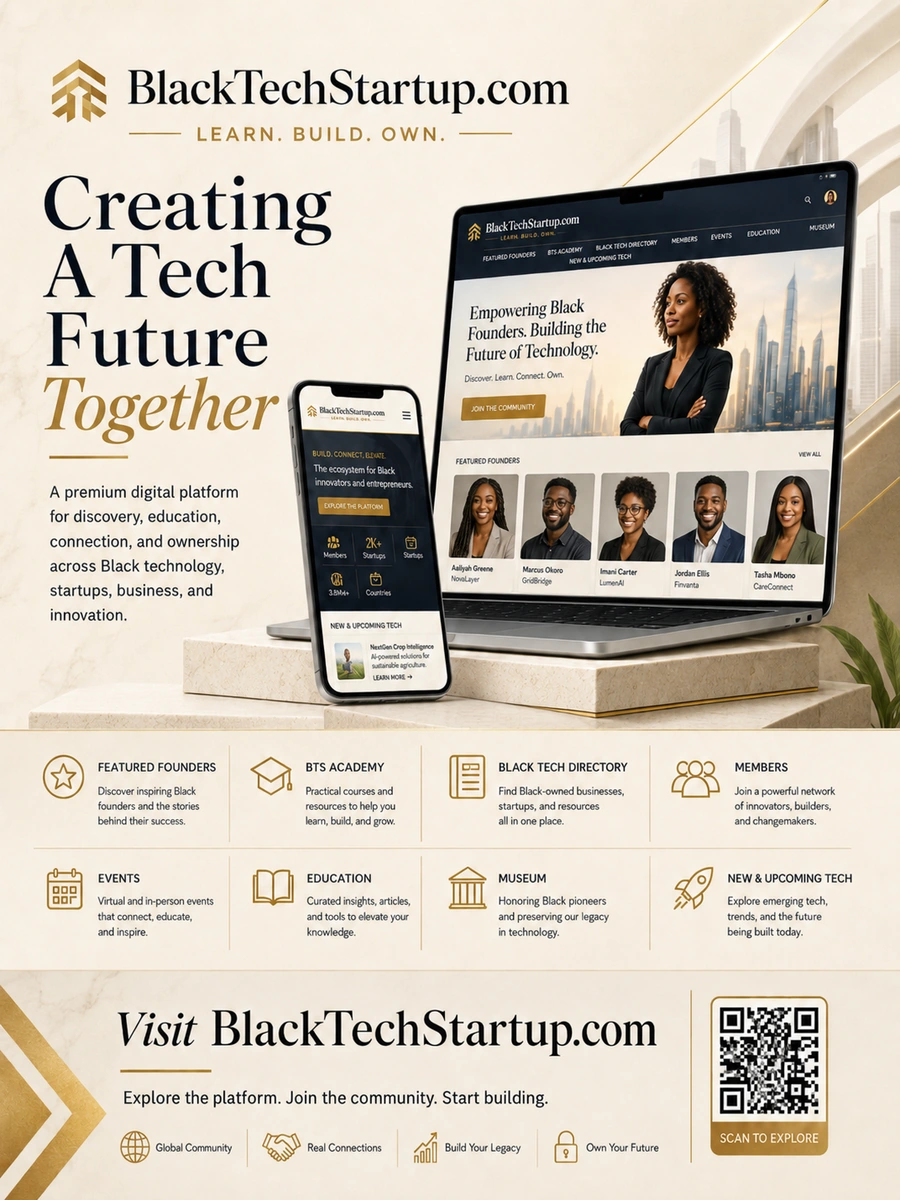
WHAT CAN YOU DO NOW?
BTS Builder School is built around a demanding test of learning: not how much information someone consumed, but what they understand, what they can use, what they can build with AI, and what they can eventually own.

A person can want to learn technology and still spend the first twenty minutes trying to understand the explanation. Search for API and the answer may introduce endpoints, protocols, requests and responses before the original term makes sense. Search for equity and suddenly there are shares, dilution, capitalization tables and valuations.
There is a moment that can follow. Not simply, I do not understand this. Something worse: Maybe this is not for me.
BTS Builder School starts from the belief that difficulty understanding an explanation does not prove an inability to understand the subject. Sometimes the explanation failed.
The Builder School is deliberately centered on Black technological capability and ownership, but its premise is not that Black people need less demanding material. The intelligence is already there. The curiosity is already there. The creativity is already there. The question is whether people can reach sophisticated knowledge, understand it, use AI to apply it, judge the result and eventually build something for themselves.
Clear does not mean shallow.
BTS Builder School aims for approximately a sixth-grade level of explanation when it can. That does not mean sixth-grade subjects. A learner may be studying artificial intelligence, product building, APIs, databases, software testing, cloud tools or intellectual property.
The subject can be difficult. The explanation does not need to prove its seriousness by being confusing.
The Builder School keeps professional terminology because learners will eventually encounter the real language. An API stays an API. Supabase stays Supabase. An SDK stays an SDK. An environment variable stays an environment variable. The job is to explain the term well enough that it stops functioning like a gate.
Teach the language, not a substitute
First give the real term. Then the full name when one exists. Explain it in plain language. Give a useful example. Show it in a real product. Let the learner use it. Then use the professional term again.
A learner should not have to pretend to understand professional vocabulary to earn the right to have it explained.

Clear teaching should make the learner more able to enter a technical conversation, not more dependent on simplified language forever.

A completed course proves very little by itself.
The harder question is whether the learner can now do something they could not do before.
Someone can watch AI tutorials for weeks without building anything. Someone can copy prompts without learning how to judge the result. Someone can study artificial intelligence without learning how to recognize when a system produces a weak or incorrect answer.
Information entered the person's head. But what changed?
BTS Builder School uses a harder measurement: What can this person do now that they could not do before?
In Builder School, a learner starts with an idea, uses AI to turn it into a product foundation, builds from that foundation, sets hard rules, audits the result, fixes root causes and retests. The learner is not being trained to write every line of code. They are learning to direct AI and judge what it produces.
Can the learner give AI a clear foundation and hard rules to build from?
Can the learner recognize a weak answer and test what is true?
Can the learner find a failure, fix the root cause and retest the product?
Can the learner use AI to connect a service and verify that it works correctly?
Real work eventually goes wrong.

Work does not always end at five. Children need attention. Parents need care. Someone may have thirty minutes tonight instead of three uninterrupted hours. Self guided learning gives the learner more control over when education enters their life. The curriculum then has to be strong enough to stand on its own.
A build fails. A business assumption is wrong. A security setup has a weakness. An artificial intelligence system gives a convincing false answer. The learner needs experience with what to do next.
The person who has only studied correct examples is still missing part of the skill. Can the learner slow down, identify the problem, test a possible cause, fix the root cause and retest?
That process develops a form of confidence that cannot be handed to someone with encouraging words. It comes from evidence: I have been confused before and figured something out.
A self guided lesson should not leave the learner stranded. Terms need definitions. Exercises need to match what was taught. A lab has to work. Hints and Teacher help should simplify, show an example or walk the learner through the next step. The learner should know what they are learning, why it matters and what comes next.
Self guided does not mean unsupported. The course has to anticipate where a real beginner may get lost and provide clear Hints and Teacher help when they need it.

Exposure is not intelligence.
BTS Builder School is designed to build infrastructure around capability that already exists.
Not everyone grew up around software engineers. Not everyone knows a founder. Not everyone can pay thousands of dollars for training. Those conditions say something about exposure. They do not measure intelligence.
BTS Builder School cannot guarantee that a product succeeds, that an investor funds a company, that a business survives or that a learner becomes wealthy. It can close practical gaps that education can reach.
A learner can define a product clearly, build with AI, set hard rules, test what was built, fix root causes, and use tools such as APIs and Supabase without having to become a traditional coder.
Who owns what you built?
Technology education often stops at learning a skill. BTS Builder School refuses to make skill acquisition the ceiling. A learner should also understand who owns the software, the company, the copyright, the patent rights, the data, the revenue and the equity.
A person does not need to become a founder for those questions to matter. A creator should understand intellectual property. A founder should understand dilution. Anyone building with AI should understand what they control and what they are giving away.
- Who owns the software?
- Who receives the revenue?
- What rights do I control?
- What happens when investors receive equity?
Understand the language and practice directing, testing and judging the work.
Turn knowledge into a product, process, prototype or working system.
Understand equity, intellectual property, rights and agreements.
Customers, recurring revenue, useful technology and defensibility can make ownership matter more.
Build something worth owning.
A skill lives in the person. An asset can continue creating value after the original work is finished.
A learner can start with an idea and use AI to help turn it into a website, app, workflow or software product. The learner defines what should be built, sets the rules, judges the result, tests it and improves it. Now there can be an asset.
Someone studies artificial intelligence. Knowing how a system works is useful. Building a workflow that saves a business ten hours every week is different. That workflow has economic value.
Ownership alone does not create value. A bad application is still a bad application. A business nobody wants is not valuable because someone owns all of it. The harder job is building something that solves a real problem and becomes more useful, more defensible or more valuable over time.
The Builder School gives learners tools to ask better questions about software, products, data, intellectual property and ownership before value is created or control is surrendered.
Learn the language, product logic and technology well enough to make informed choices.
Create useful work around a problem that matters to someone beyond the builder.
Understand the product, rights, data, equity, contracts and intellectual property you control.
Look for customers, licenses, recurring revenue or reusable systems that can produce value more than once.
Improve the product, trust, distribution, intellectual property and customer value over time.
THE GOVERNMENT IS A CUSTOMER
The federal government awarded about $179 billion in prime contracts to small businesses in fiscal 2025. For Black business owners, the opportunity is real. So are the rules, the cash demands, the competition, and the consequences of winning work your company is not prepared to perform.

In 2004, Wonderlyn Murphy was working evenings as a correctional officer while building houses part time. She had also started City Enterprise, a general contracting company.
Her father understood something about the federal market. His own company had participated in the Small Business Administration's 8(a) Business Development Program. According to SBA's account, during a family dinner he told his daughter, “You should get your 8(a).”
Murphy researched the program and applied. She did not get in.
SBA says she was still working her full time job and did not yet have enough general contracting experience. She spent another year gaining experience and building relationships with agencies she hoped to serve. Eventually, she applied again successfully.
Then came the harder lesson. Certification did not produce an immediate stream of federal contracts. The economy weakened. Opportunities slowed. Murphy kept developing the company and sought procurement assistance through what is now the APEX Accelerator system.
After obtaining the certification she had pursued, Murphy still needed a company capable of competing, financing performance, and delivering after award.
A certification can create access. It cannot perform a contract.
The size of the market is not your opportunity.
The useful target is not $179 billion. It is a real public customer with a recurring need your company is prepared to solve.
A government contract is not a grant. The government is purchasing something: software, cybersecurity, construction, engineering, training, research, logistics, professional services, equipment, maintenance, data, consulting, and thousands of other products and services.
That makes government something more useful to understand than a source of money. It is a customer.
In fiscal 2025, federal agencies awarded nearly 28 percent of prime federal contracting dollars to small businesses, about $179 billion. When prime contracts and subcontracts are combined, small businesses received nearly $273 billion.
Those numbers are large enough to attract almost anybody. They should not.
The size of the federal market says very little about whether your company belongs in a particular competition. A business should pursue government work because agencies buy something the company can credibly provide, at a scale it can handle, under terms it can finance, at economics that make sense.
A multimillion dollar solicitation can look like opportunity from a distance. Up close, it may require people you do not have, insurance you have not priced, security controls you have not built, cash you cannot tie up, or experience the solicitation does not allow you to substitute with enthusiasm.
Federal contracting is the focus here. State, county, municipal, school-system, transit-authority, and other public agencies can be important customers too. But government is not one procurement system.
This article focuses primarily on federal contracting, where the Federal Acquisition Regulation, SAM.gov, SBA programs, and federal agency procedures create the framework discussed here.
A state may have its own procurement code. A city may have its own vendor registration. A school district may use another bidding system. A transportation authority may recognize certifications that have nothing to do with eligibility for a federal 8(a) award.
Do not take a federal rule from this article and assume your city follows it. The business discipline may travel. The rule may not.
Do not start by hunting contracts.
Before asking what you can bid on today, learn how your target customer has been buying for years.
The beginner's instinct is understandable. Open SAM.gov. Search a few words. Find a large solicitation. Start imagining the revenue. That sequence is backward.
USAspending provides public federal award information that can help a business study agencies, contractors, industries, award values, and historical spending.
A cybersecurity firm should know which agencies repeatedly purchase the security work it actually performs. A software company should know whether agencies buy its category directly, through resellers, under a governmentwide vehicle, or through another prime contractor. A construction company should know the size and type of projects an agency normally awards.
The research should become specific enough to affect a business decision: Who buys what we sell? How often? At what size? Who currently wins? What NAICS and Product and Service Codes appear? What vehicles appear? Are set asides common? Who is the incumbent? When does the current contract end?
Sometimes the answer will be pursue it. Sometimes subcontract. Sometimes go smaller. Sometimes the answer will simply be not yet.

Find agencies, incumbents, award sizes, codes, and buying patterns.
Use forecast and market-research signals before a final solicitation appears.
Make capabilities, relevant work, classifications, and evidence clear.
Use evidence to decide whether the opportunity deserves company resources.
The government may look for you before you ever see an RFP. Agencies conduct market research to understand what products and services exist and whether capable vendors are available. SBA tells federal contracting officials to use Small Business Search as part of that market research.
Put a business owner on the other side of that search. The company may have spent years becoming good at the work. Then a contracting professional searches the market. What will that person find?
If the profile says little more than innovative solutions, quality service, and mission excellence, the buyer still does not know much. What do you perform? What have you delivered? For whom? At what scale? What evidence shows you can perform?
A capability statement is a business development tool, not a magic document and not a substitute for a proposal. It should make a capable company understandable.
RFI, RFQ, and RFP are not the same thing.
The notice tells you where the government is in the buying process and what kind of response it expects.
The GSA Forecast of Contracting Opportunities can show potential procurements before a formal solicitation appears in SAM.gov. Forecasts can change and do not obligate the government to buy anything. But they give a business time.
Months before a solicitation, an owner can study the incumbent, learn the mission, assess whether the expected contract is too large, look for partners, price security or technical requirements, and decide whether the pursuit belongs in the company's pipeline.
A Sources Sought notice or Request for Information can be equally important. If an agency is trying to determine whether capable businesses exist, a credible response gives it evidence about the market.
Government contracting also happens through people. Legitimate pre-solicitation exchanges can include industry days, draft solicitations, RFIs, meetings, and other communication. Relationships should reduce uncertainty on both sides. They are not a secret entrance around procurement rules.
SAM assigns the Unique Entity ID during registration. A UEI alone is not the same as an active SAM registration.
Direct federal prime award applicants generally need the appropriate active registration. Registration is free and must be kept active.
Industry codes connect to SBA size standards. “Small” has a legal meaning in federal contracting.
SAM is necessary. SAM is not a sales department. An owner can obtain a UEI, complete SAM, select NAICS codes, finish representations and certifications, build a capability statement, and still have no federal customer strategy.
Registration creates the administrative foundation for competing. It does not create demand. It does not mean an agency knows the company exists. It does not mean the company qualifies as small for every procurement. And it does not mean a contract is coming.
The current general micro purchase threshold is $15,000. The current general simplified acquisition threshold is $350,000. Different thresholds apply in certain special circumstances.
A set aside creates a lane. It does not hand you the race. The company still has to qualify, follow the solicitation, compete, and perform.
Black owned does not mean federally certified.
Loose language around certifications can cost Black business owners time, money, and attention.
The 8(a) Business Development Program, HUBZone, Women-Owned Small Business, and Service-Disabled Veteran-Owned Small Business programs each have their own eligibility rules.
A company may qualify for one program, several, or none. The company should not be rebuilt around whichever acronym somebody says will produce the most money.
For Black founders, 8(a) requires particular attention because the rules concerning social disadvantage are changing. In 2023, a federal court enjoined SBA from continuing to use the previous rebuttable presumption for individually owned firms.
On August 11, 2026, SBA published a final rule removing that presumption from its regulations for individually owned firms and establishing revised standards for demonstrating social disadvantage. The rule is scheduled to take effect September 10, 2026.
Black identity by itself does not establish 8(a) eligibility. Current SBA eligibility information also includes ownership, control, size, economic disadvantage, character, and potential-for-success requirements.
Murphy's experience makes the larger point. She pursued 8(a). She eventually qualified. The certification still did not cause contracts to pour into the company. She had to keep building a federal contracting business.

Historical spending shows the agency buys what you sell.
The agency may buy through an established contract vehicle or vendor pool.
Pursue the vehicle, team with a holder, subcontract, or target a different route.
Sometimes the opportunity is behind a contract vehicle. GSA describes a contract vehicle as a contract or group of contracts that allows agencies to place multiple orders with preselected vendors. Examples include the Multiple Award Schedule, multiple award contracts, and governmentwide acquisition contracts.
Do not ask only whether an agency buys your service. Ask how that agency buys it. Demand is not enough. You need a path to the demand.
Even obtaining a contract vehicle does not guarantee sales. The business still has to compete for work.
Prime is a responsibility, not a trophy.
The goal is not to collect the title of prime contractor. It is to build a durable position in a market without taking risk the company cannot yet carry.
Contracts directly with the government and owns responsibility for completing the work, managing subcontractors, schedule, compliance, and contract performance.
Can gain relevant experience, customer knowledge, and operating discipline while a more experienced prime retains responsibility for the overall government contract.
The bid / no-bid gate
Tap the statements you can prove today. This is a decision frame, not a guarantee of award.
A solicitation arrives. The company is eligible to compete. The deadline is three weeks away. The founder can bid. That is not the important question.
Should the company bid?
Picture the decision in operational terms. If the company wins, who has to be hired? How much payroll begins before the first payment arrives? Which existing clients still need attention? What happens if a key employee leaves? What does the company have to finance? What happens if the estimate was wrong?
Federal responsibility standards include adequate financial resources or the ability to obtain them, ability to meet the required schedule, satisfactory performance, integrity, necessary organization and experience, accounting and operational controls, technical skills, equipment or facilities where required, and legal eligibility.
The government wants to know whether the company can carry the contract. The owner should know first.
Description, specifications, or statement of work in negotiated acquisitions using the Uniform Contract Format.
Instructions and other information used to guide proposal preparation.
Evaluation factors. Other acquisition structures can look different, so always read the actual solicitation.
Follow the solicitation, not your ego. A founder naturally wants to explain everything impressive about the business. The evaluator has to apply the factors the government said it would use.
A technically excellent company can submit a poor proposal. The government is not obligated to reward information it did not ask the evaluator to judge.
Past performance is more nuanced than people tell you. FAR Part 15 can allow similar federal, state, local, and private contracts, and relevant performance of key personnel or major subcontractors where appropriate. Read what the solicitation actually defines as relevant.
A no-bid decision is not automatically a failure of ambition. Sometimes it is evidence of management.
Revenue can lie.
The number on the award is not the same thing as profit, cash, or economic value.

Suppose the company wins a $2 million contract. The founder announces $2 million in new business. The number may be real. The profit is not known yet.
A firm fixed price contract makes the danger easy to understand. Under the FAR, a firm fixed price is not adjusted simply because the contractor's actual costs turned out differently than expected. Maximum cost risk and responsibility for the resulting profit or loss sit with the contractor.
The company estimated 5,000 labor hours. The work takes 7,000. Software costs more. Insurance rises. Travel expands. A subcontractor's estimate was incomplete. Another manager has to be hired. Compliance requires additional systems.
Pricing cannot begin with What number do we think will win? It has to begin with What does this work actually cost us to perform?
For Black contractors, working capital cannot be a footnote. Employees still need to be paid. Subcontractors send invoices. Materials may have to be purchased. Insurance is due. The business may have to perform before it can invoice.
The company can hold a profitable contract and still face a cash problem.
Before bidding, model when payroll leaves, when subcontractors are due, when the company can invoice, what triggers government acceptance, what credit is available now, and how long the company can perform if payment takes longer than expected.
Federal policy establishes accelerated payment goals for many small-business payments, but do not build payroll around the sentence the government pays small businesses in 15 days. Read the actual contract and understand invoicing, acceptance, and payment terms.
Winning is where the promise becomes an obligation.
Compliance, scope control, documentation, and learning from loss are not administrative side issues. They protect margin, reputation, and the next opportunity.
Cybersecurity, data handling, insurance, background checks, labor rules, reporting, systems, and facilities can create real cost.
Only contracting officers acting within their authority can execute contract modifications on behalf of the government.
For qualifying FAR Part 15 procurements, an entitled postaward debriefing generally must be requested within three days of award notice.
Compliance belongs in the bid decision. Technology businesses need to be particularly careful, but the principle applies across industries. A contract may bring cybersecurity obligations, data handling requirements, insurance, background investigations, quality controls, labor requirements, reporting, accounting expectations, facilities requirements, or specific systems.
Those costs do not become less real because the founder discovers them after award. Information also expires. Thresholds change. Rules change. Programs change. Clauses change. Verification has to become a business habit.
Winning does not mean everyone from the government can change the deal. Someone asks for additional work. The request sounds small. Maybe the team does it because saying no feels like a bad way to begin a relationship. Then another request arrives. The scope starts moving.
Federal policy is explicit: only contracting officers acting within the scope of their authority can execute contract modifications on behalf of the government.
Being helpful does not mean performing unauthorized additional work for free.
Document changes. Understand the effect on cost and schedule. Do not confuse a request from an important person with contractual authority.
What did the company deliver? At what scale? What problems were solved? What did the government document? What capability exists now that did not exist before?
When an entitled FAR Part 15 debriefing is available, have a process ready before the loss occurs. Study the feedback without ego and improve the next pursuit.
There is no secret entrance.
Government contracting can become serious revenue. It can also consume years, cash, and attention when a company enters without a credible market position.
Government contracting has created an industry around government contracting: consultants, proposal firms, registration services, courses, opportunity databases, certification assistance, attorneys, accountants, and cybersecurity specialists.
Some provide real expertise. Some solve expensive problems. Some businesses should hire them.
But start from facts. SAM registration is free. A UEI is not something a company has to buy from a private service. SAM identifies APEX Accelerators as an official source of free registration help, and broader APEX counseling can help businesses assess readiness, research opportunities, understand certification, and navigate performance.
If someone says you must pay that company to obtain federal registration, verify the claim through an official government source. If someone promises certification guarantees contracts, stop. It does not.
Pay when expertise creates value. Do not pay because someone convinced you there is a secret entrance to federal contracting.
Know when government contracting is a bad fit. Not every good company should become a government contractor. It may be a poor fit when the company cannot identify agencies that buy what it sells, margins cannot support the compliance burden, the business cannot finance performance, leadership cannot devote the time, or the only strategy is get certified and see what happens.
Government contracting is not a moral achievement. It is a market.
Murphy's first 8(a) application did not produce the answer she wanted. She built more experience. She developed relationships. She returned. Then certification came. And even then, the market did not immediately hand her contracts. She continued building.
That progression matters because it strips away one of the most dangerous ideas in government contracting: access and readiness are not the same thing.
THE RISE OF AI AGENTS
Artificial intelligence spent the last few years learning how to answer us. Now it is learning how to act — browsing, coding, operating software, calling tools and working through tasks that once required a person at every step.

A chatbot waits. An agent can keep going.
The important change is not intelligence alone. It is delegated action.
A chatbot waits for a prompt, produces an answer and stops. That interaction taught millions of people what generative AI felt like. Ask for a marketing plan. Explain a contract. Write code. Summarize a report. The human remained the driver.
Give an AI agent a goal and, depending on the system, it may decide which steps are necessary, search for information, open software, write or edit files, run code, use outside tools, inspect what happened, correct course and continue.
Suppose the goal is: Find five strong competitors in my market and build a comparison report. An agent can potentially break that into research, browsing, data collection, comparison, file creation and presentation work. One objective becomes a chain of decisions.
The useful distinction is not whether the product looks futuristic. It is who is deciding the next step.

The computer itself is becoming a tool.
Humans have always had one advantage over software integrations: if no API exists, we can still look at a screen, click the button, scroll, type, open a menu and try again.
Computer-use agents are beginning to acquire versions of those abilities. Google now builds computer use into Gemini models so agents can see interfaces, reason about what is happening and act across browser, desktop and mobile environments.
That can unlock software that was designed for people rather than machines. It also raises the stakes. An AI that merely produces a wrong answer is one problem. An AI with permission to take the wrong action is another.
A machine can look ready long before it is dependable.
The most important agent skill for a business owner may be learning the difference between can do and can be trusted to do repeatedly.
Two very different tests
Then researchers changed the terrain. OSWorld 2.0 contains 108 long end-to-end workflows. A typical task takes a human about 1.6 hours and may require hundreds of agent actions. The best tested system fully completed only 20.6 percent.
That reversal is not a contradiction. It is what happens when a technology graduates from a short benchmark to work that behaves more like work.
A business does not need an agent that succeeds once in a beautiful demo. It needs one that succeeds tomorrow, after a website changes, after a conflicting email arrives, when the customer name contains an apostrophe, and when the correct move is to stop and ask a human.
Agents are starting to get an ecosystem.
The visible model is only part of the value chain.
An agent becomes much more useful when it can reach the tools and information required to perform a task. MCP, the Model Context Protocol, is becoming one standardized way for an agent to connect with outside tools and data. Anthropic reported more than 400 million MCP SDK downloads per month by late July 2026.
A2A tackles a different problem: agents communicating with other agents. The Linux Foundation reported support from more than 150 organizations during the protocol's first year, and the Agentic AI Foundation reached 247 members by August.
Those numbers do not prove today's standards will become permanent winners. They do show an ecosystem forming around agent connectivity and coordination.
For builders, that matters because the visible chatbot may not be where all the value accumulates. Connectors, permissions, security, vertical software, workflow engines and specialized data can become important infrastructure too.
Black businesses are not arriving after the race.
Most firms are still experimenting. Agentic AI is arriving before enterprise integration is finished.
The Federal Reserve's 2026 employer-firm research found 46 percent of surveyed firms currently used AI, but only 7 percent of AI-using firms described it as fully integrated. Most businesses are still somewhere between trying AI and reorganizing work around it.
Among Black-owned employer firms, 35 percent reported currently using AI. Another 31 percent that were not using it said they planned to begin within 12 months. Those figures measure AI broadly, not agents specifically.
That timing creates both opportunity and risk. A business can enter at the consumer layer and rent every critical capability from somebody else. Or it can learn enough about the workflow to build proprietary process, software, data and customer advantage around the technology.


Anthropic's study of roughly 400,000 Claude Code sessions found humans made most planning decisions while the agent handled more execution. Greater domain expertise was associated with agents doing more work per instruction and somewhat better success.

A five-person company may start behaving like something larger.
Not because AI replaces everyone, but because software can absorb more of the intermediate work.
A founder sells, answers email, researches competitors, prepares proposals, checks invoices, manages customers, updates systems and deals with the work that simply has to get done. Agents could compress parts of that burden.
That does not justify saying five people can instantly replace fifteen. Reliability is not there. But the direction matters: when software can perform larger pieces of work, organizational leverage changes.
The labor question changes too. A job is a bundle of activities, not one indivisible thing. Research, judgment, communication, execution, verification and coordination may be affected at different speeds.
The first effect may not always look like AI replaces worker. It may look like one worker handles more, a junior task disappears, a new supervisory role appears, or a company grows without hiring at the rate it once would have.
That is not a forecast of exactly what will happen. It is the operational question businesses and workers should already be learning to ask.
The more useful the agent, the more dangerous its permissions can become.
Files. Email. Customer records. Code repositories. Browsers. Databases. Calendars. Financial systems. An agent becomes powerful by gaining access to the places where work actually happens.
Prompt injection shows why that access matters. Malicious instructions can be hidden inside content an agent reads and attempt to manipulate the system into taking an action the user never intended.
The practical rule is old even if the technology is new: do not grant more authority than necessary. Sensitive or irreversible actions should trigger stronger confirmation, isolation and human review.
Long agent runs can require many model calls, tool actions, retries, file operations and verification steps. The right business metric is not merely subscription price. It is cost per correctly completed workflow.
The chatbox was the introduction. Now the work begins.
AI news moves so quickly that every week feels late. But most businesses have not fully integrated AI, agent reliability remains weak on hard long-horizon work, security is still evolving, standards are still forming and entire categories of vertical agent software have not been built.
Black people are already using AI. The more useful question is what position we occupy as the technology becomes more economically important: user, worker augmented by AI, workflow designer, builder, founder, infrastructure provider, owner.
The next question is no longer only What does AI know? It is What can it actually do?
It may sit in the software. The workflow. The proprietary data. The customer relationship. The domain expertise. The integration. The company built around all of it.
HE SENT JEFFERSON THE EVIDENCE
Benjamin Banneker did not need the myths later generations built around him. The documented story is harder, stranger and more revealing: a free Black farmer in slaveholding Maryland mastered astronomy, calculated an almanac, and sent his work directly to Thomas Jefferson—challenging a country that doubted Black intellect to explain the evidence in front of it.
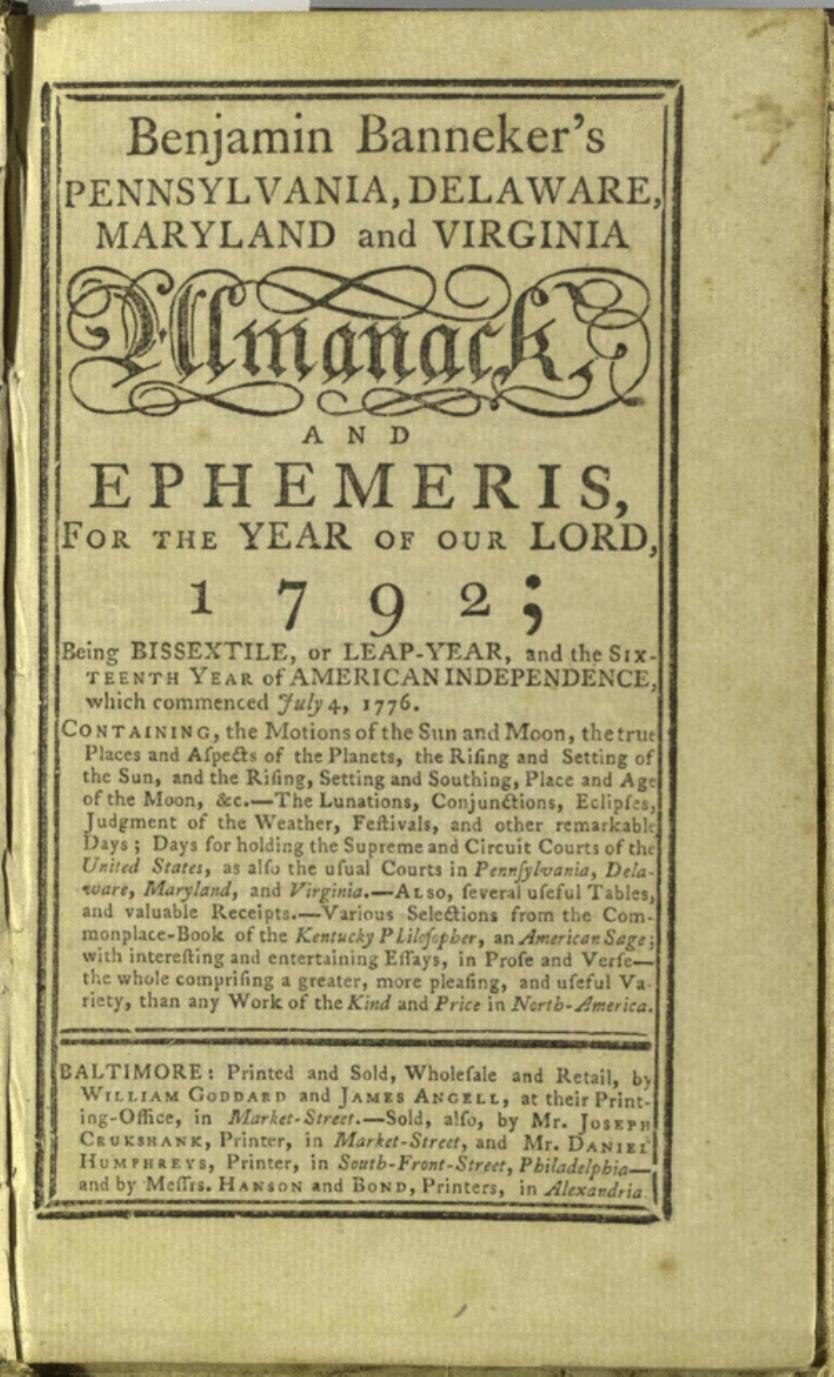
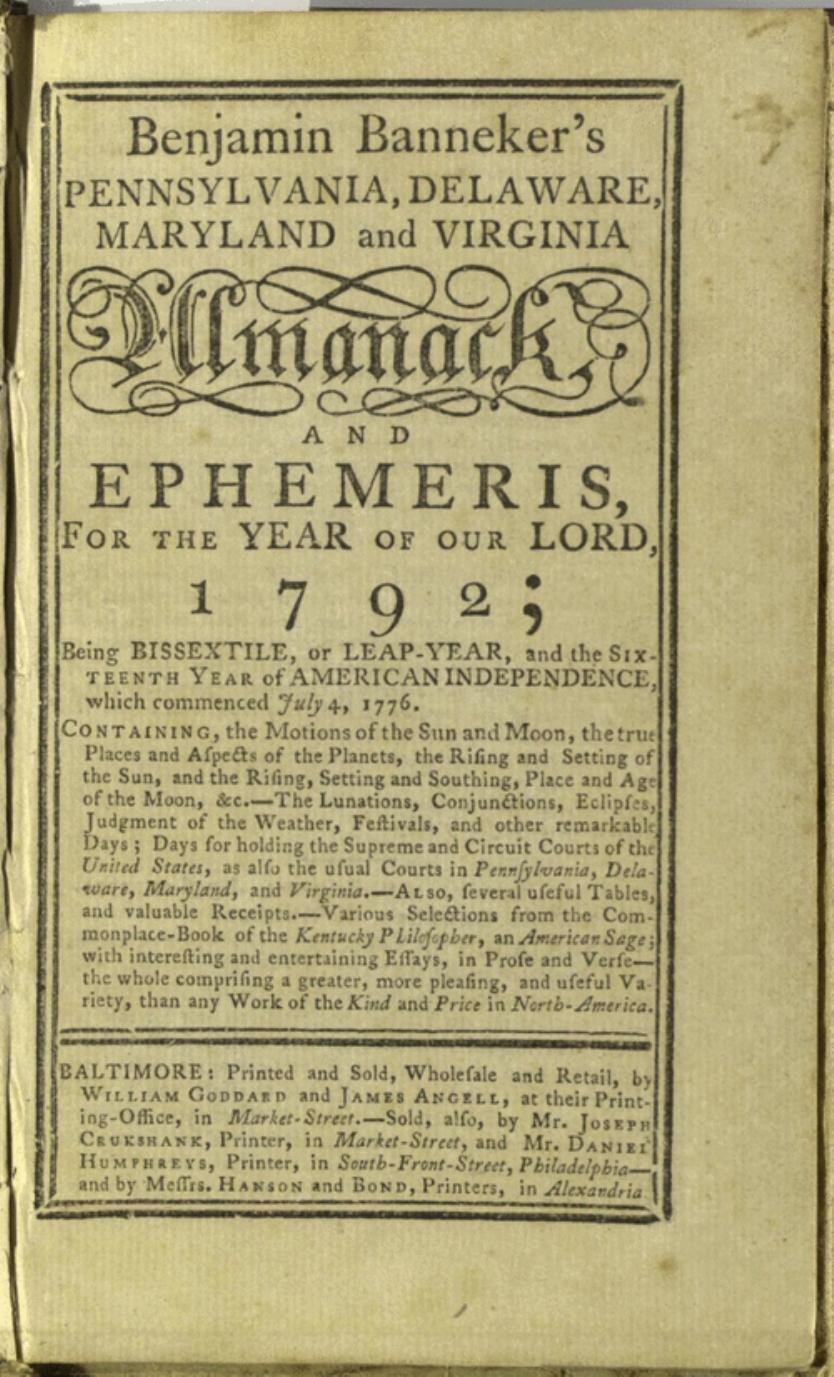
On August 19, 1791, Benjamin Banneker addressed a letter to Thomas Jefferson, then secretary of state. He challenged the contradiction between American claims of liberty and the enslavement of Black people. Then he enclosed something harder to wave away: a manuscript of the astronomical calculations he had prepared for the coming year.
Banneker was not asking Jefferson merely to reconsider what white America believed about Black ability. He was putting work on the table.
An almanac was a working information system.
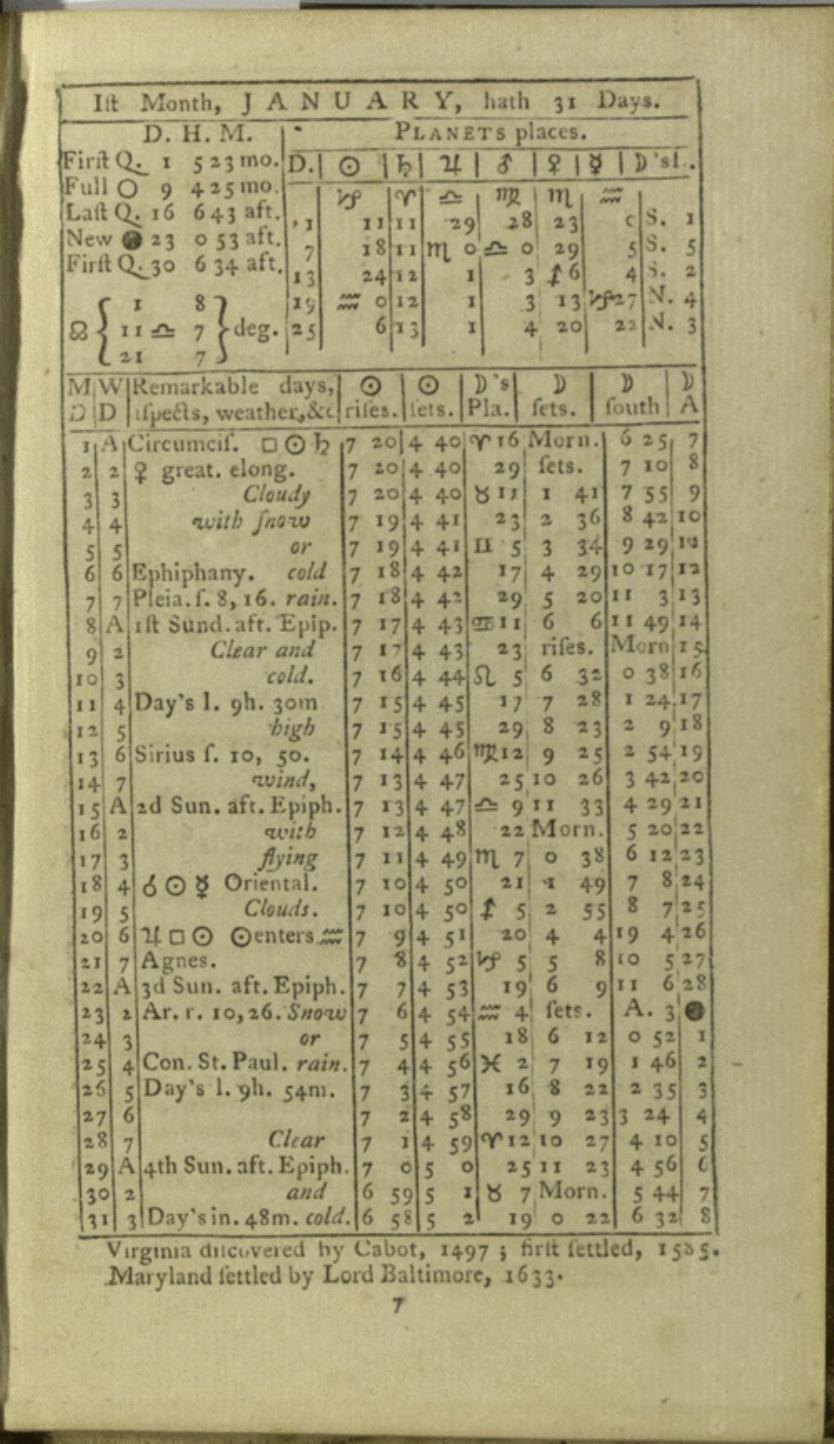
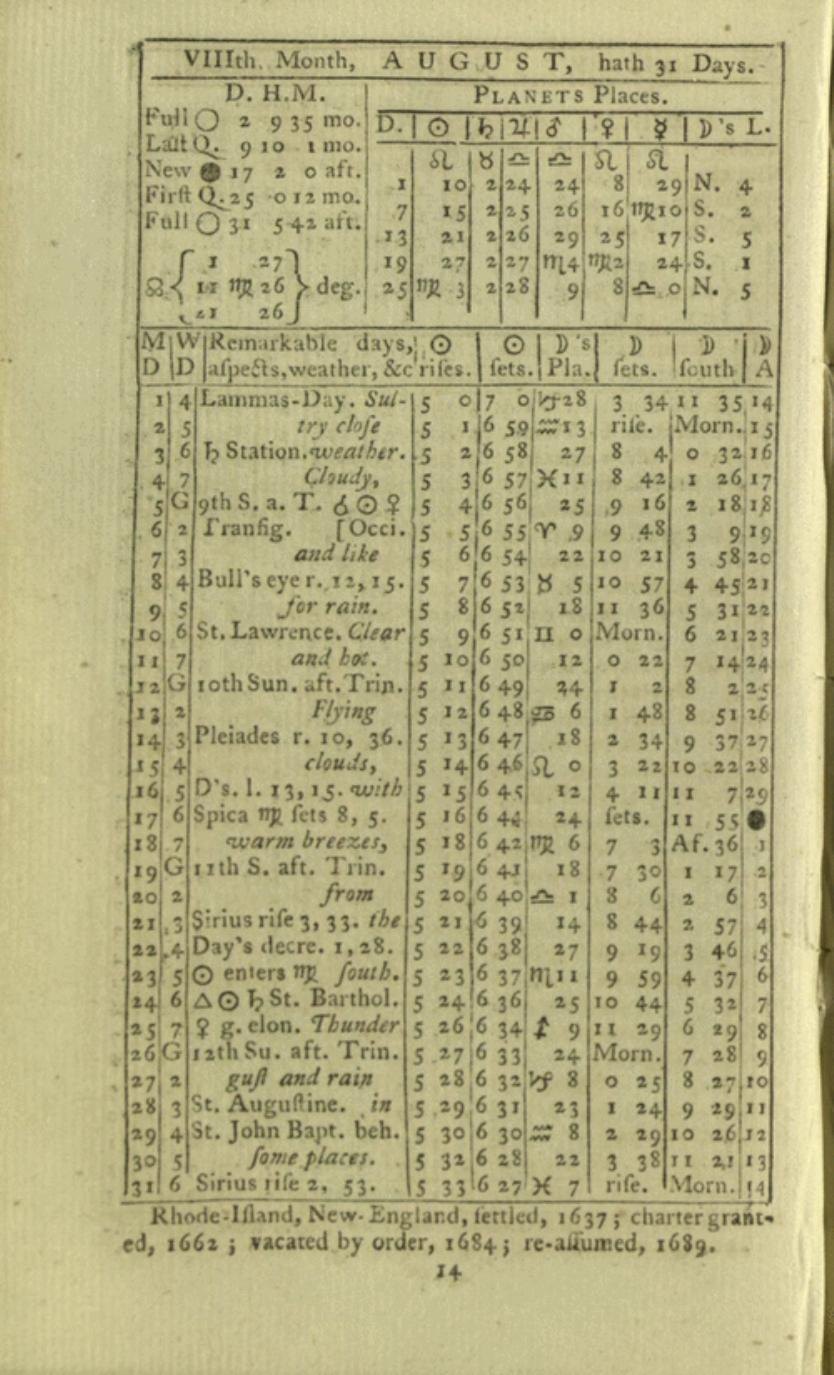
Calling Banneker an “almanac maker” can make the work sound quaint. The useful question is what the book required. At its technical core sat an ephemeris: calculated positions and astronomical events laid out across the year.
The calculator had to work through astronomical tables, celestial relationships and sequences in which an early error could contaminate later results. Banneker began serious astronomical study in his late fifties. George Ellicott lent him books and instruments. Banneker studied them and did the calculations.
His work reached people capable of judging it. William Waring examined the calculations. David Rittenhouse, one of the country's best-known scientific figures, also reviewed the work before publication. Their scrutiny matters because Banneker's achievement does not rest only on later praise.
The published almanac then combined Banneker's calculated ephemeris with practical reference material assembled for readers. Science became something portable: printed, sold, checked and used.
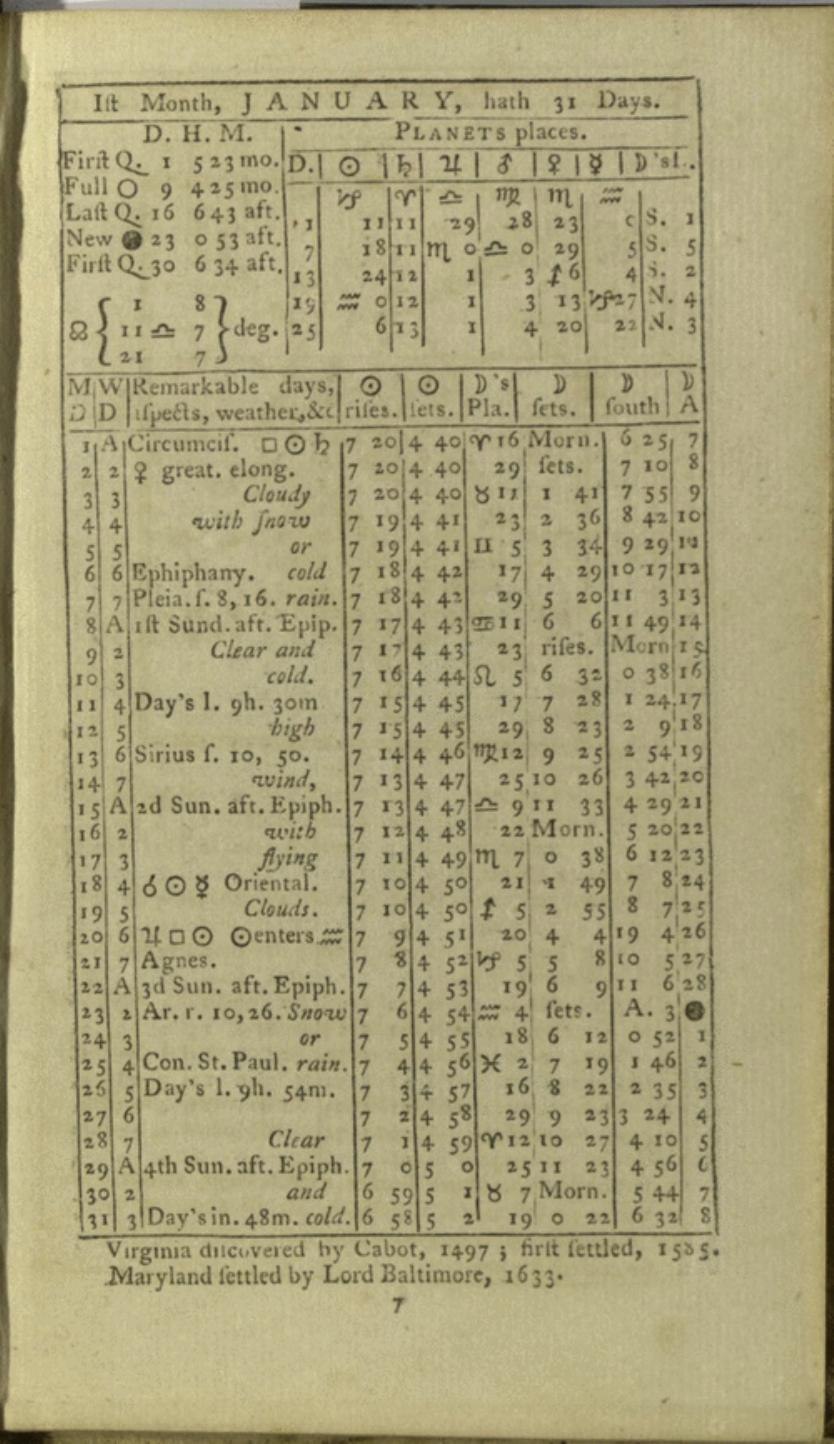 January ephemeris
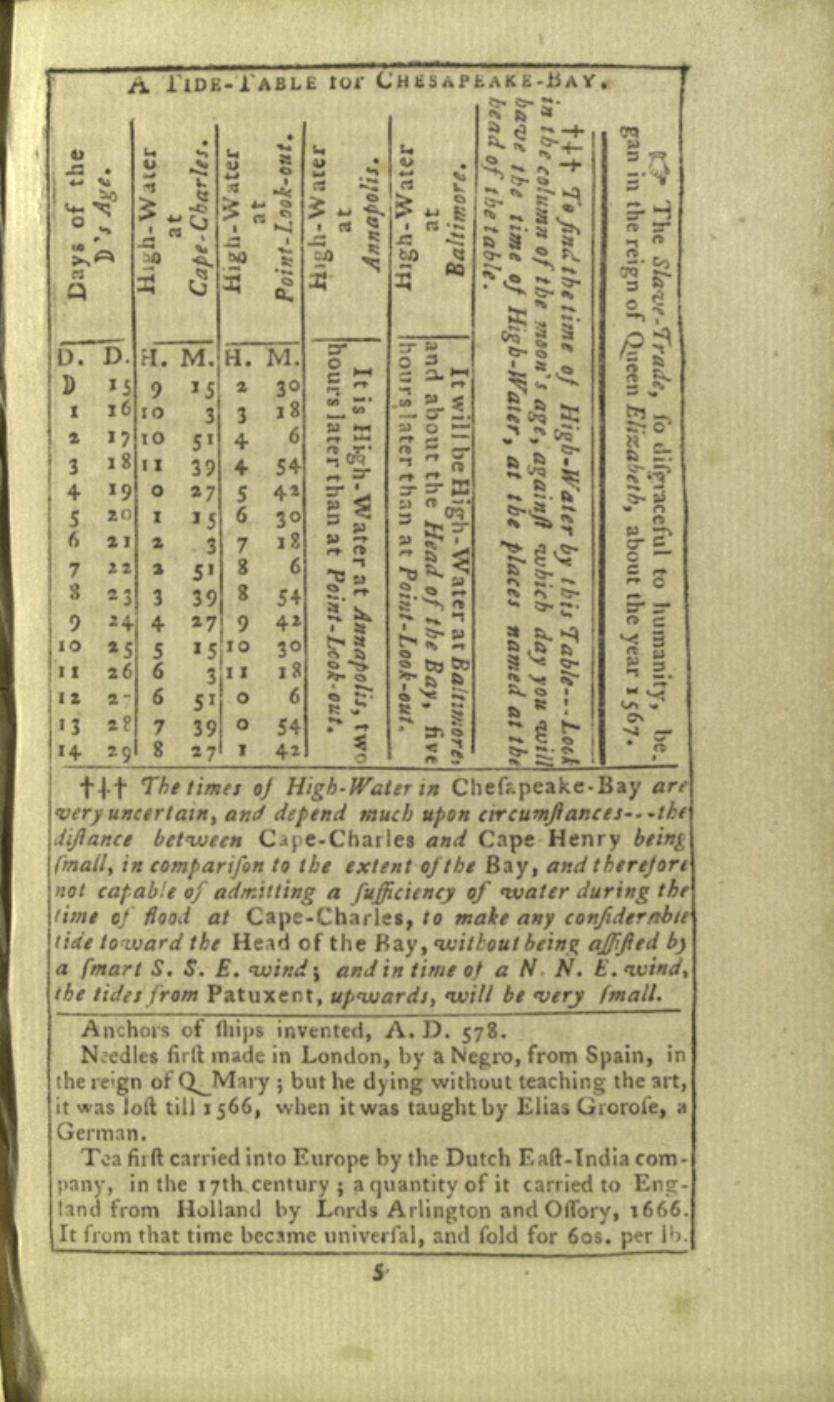 Published tide table
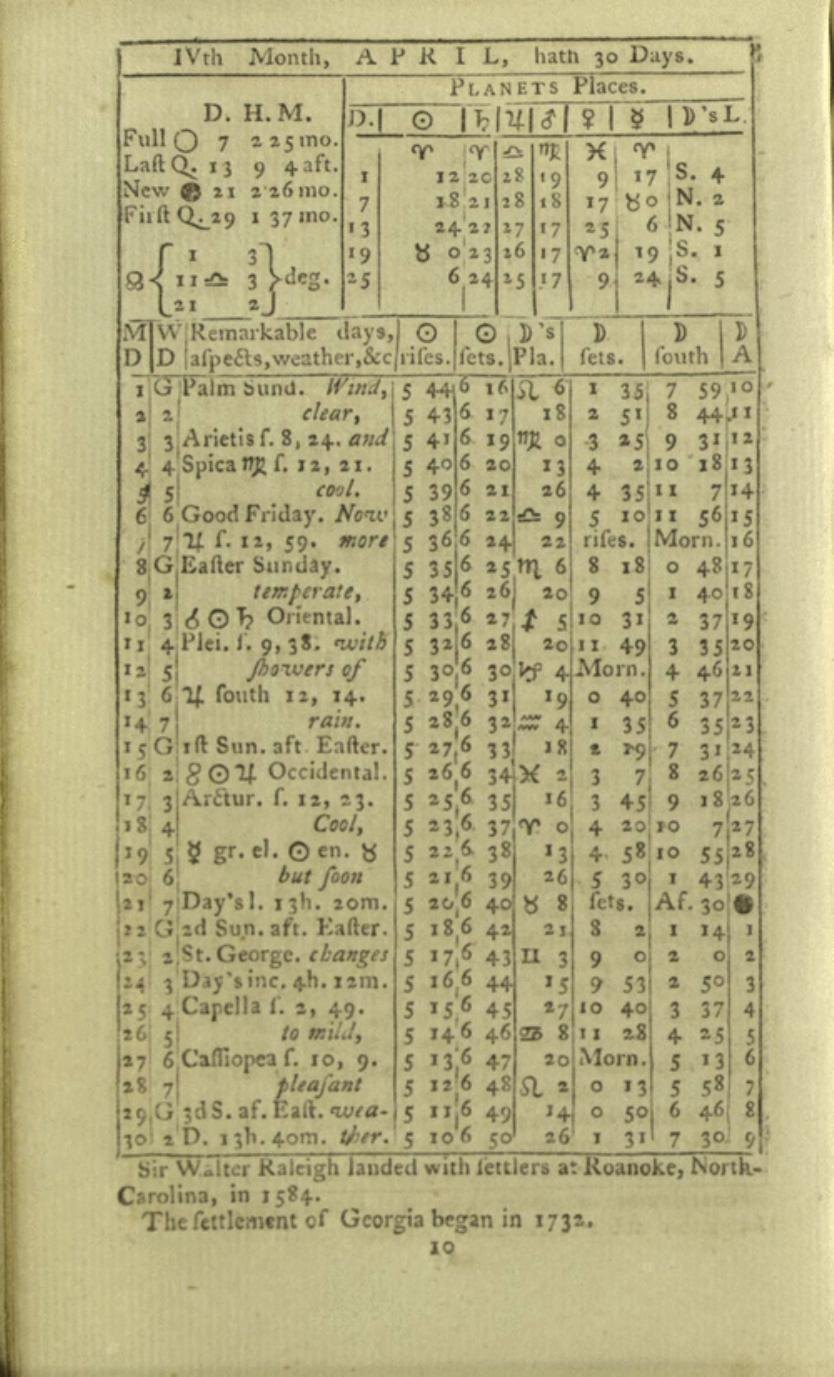 Astronomical table
Translate celestial motion into dates and numerical predictions.
Results could be compared against astronomical tables and other calculators.
A handwritten calculation became reproducible information.
Readers carried astronomy alongside calendars and practical reference material.
Banneker used books, tables and instruments supplied through his network. That is how technical work has always been done. The surviving record supports the calculations as his own.
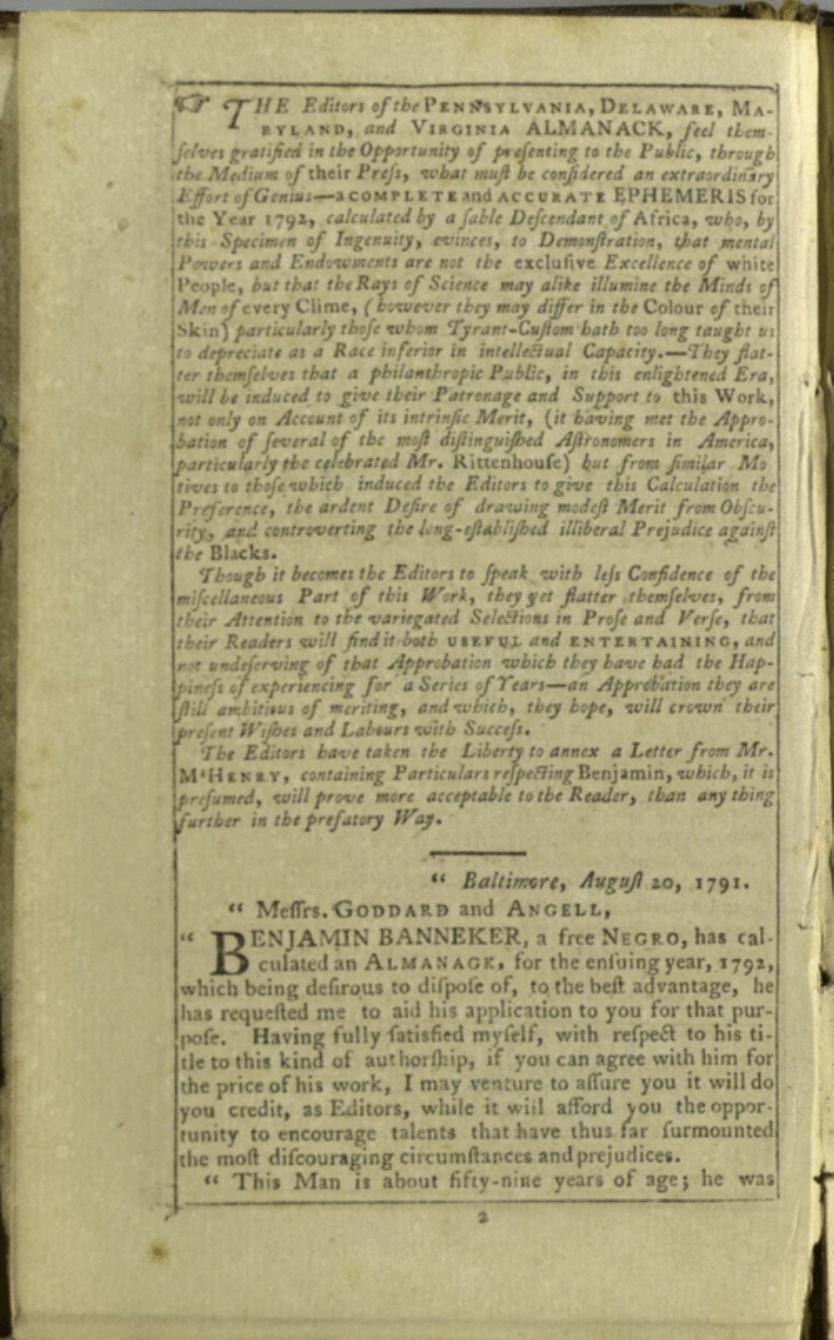
Banneker's calculations moved through examination, advocacy and printing before the almanac reached readers. Contemporary supporters addressed authorship directly because race had already made the identity of the calculator part of the story.
Jefferson understood what the calculations meant.
Jefferson had already speculated publicly about Black intellectual inferiority. Banneker's letter therefore reached a man who had helped write the language of equality while also entertaining a racial hierarchy of mind.
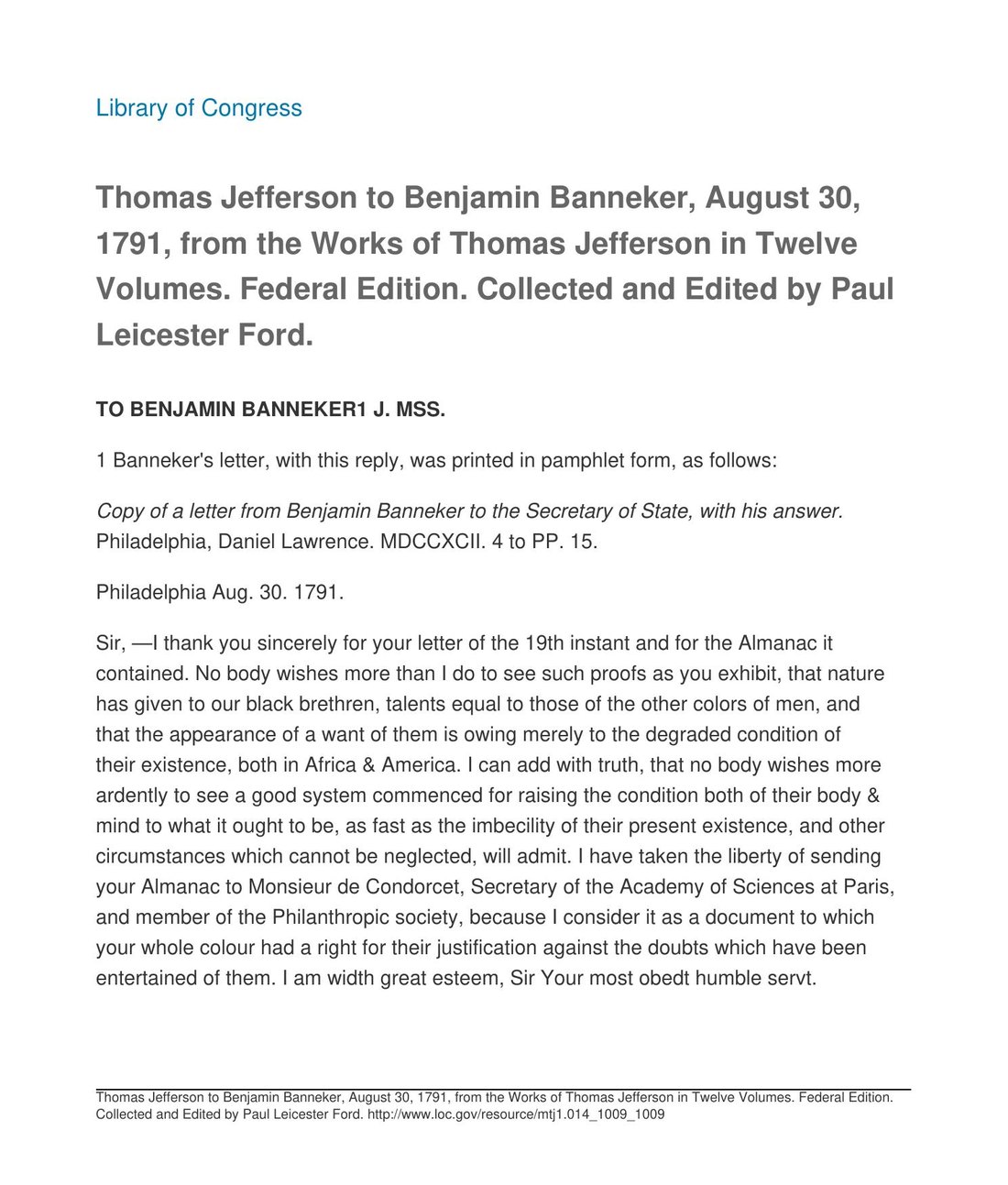
Jefferson answered on August 30. He welcomed evidence of Black abilities and wrote that he was forwarding Banneker's almanac to the Marquis de Condorcet in France. Whether the material actually reached Condorcet is uncertain.
The revealing part is the burden Jefferson attached to the work. A white astronomer's calculations could remain astronomy. Banneker's calculations were being made to answer a larger question white thinkers had constructed about Black humanity.
He praises the almanac as evidence against doubts about Black intellectual capacity and says he is forwarding it to Condorcet.
Public response to Banneker · August 1791Banneker's mathematics did not need to prove the intelligence of a race. That burden existed because racial theorists had made sweeping claims first. The almanac became politically charged because the evidence stood in front of a hierarchy that had already decided what Black minds were supposed to be.
Evidence can challenge a belief without automatically destroying it.That contrast is the accountability story. 1791: Banneker's work is useful evidence against racial doubt. 1809: the same achievement can be reduced by questioning the man who produced it.
Banneker's freedom was real. So was the system around it.
Banneker was born free, and that fact shaped what he could build. His family held land. He could manage his own labor and develop relationships that would have been radically harder under enslavement.
But “free” did not mean outside racial power. Maryland's 1790 census counted 103,036 enslaved people—nearly a third of the state's population. The census separately recorded 8,043 people in the period category “All Other Free Persons.”
Individual achievement can make structure disappear if history is told backward. The better question is what achievement required when access to education, instruments, publishing, property and legal standing was distributed so unequally.
Banneker's scientific life cannot be separated from the practical capacity to control portions of his own time and property, borrow books and instruments, and participate in networks that could evaluate and publish his work.
Free Black Marylanders lived inside laws and institutions that distinguished rights by race. Later Maryland restrictions narrowed legal standing that earlier Black residents, including Banneker, had sometimes exercised.
Banneker's status shows what was possible for one property-owning free Black man. The census shows the larger structure surrounding him: more than 103,000 people remained enslaved across the state.
Black history deserves stronger evidence, not weaker standards.
Some stories attached to Banneker were meant to honor him. They also blur the line between what survives in the record and what later generations wanted to believe. Tap a claim to see what the evidence supports.
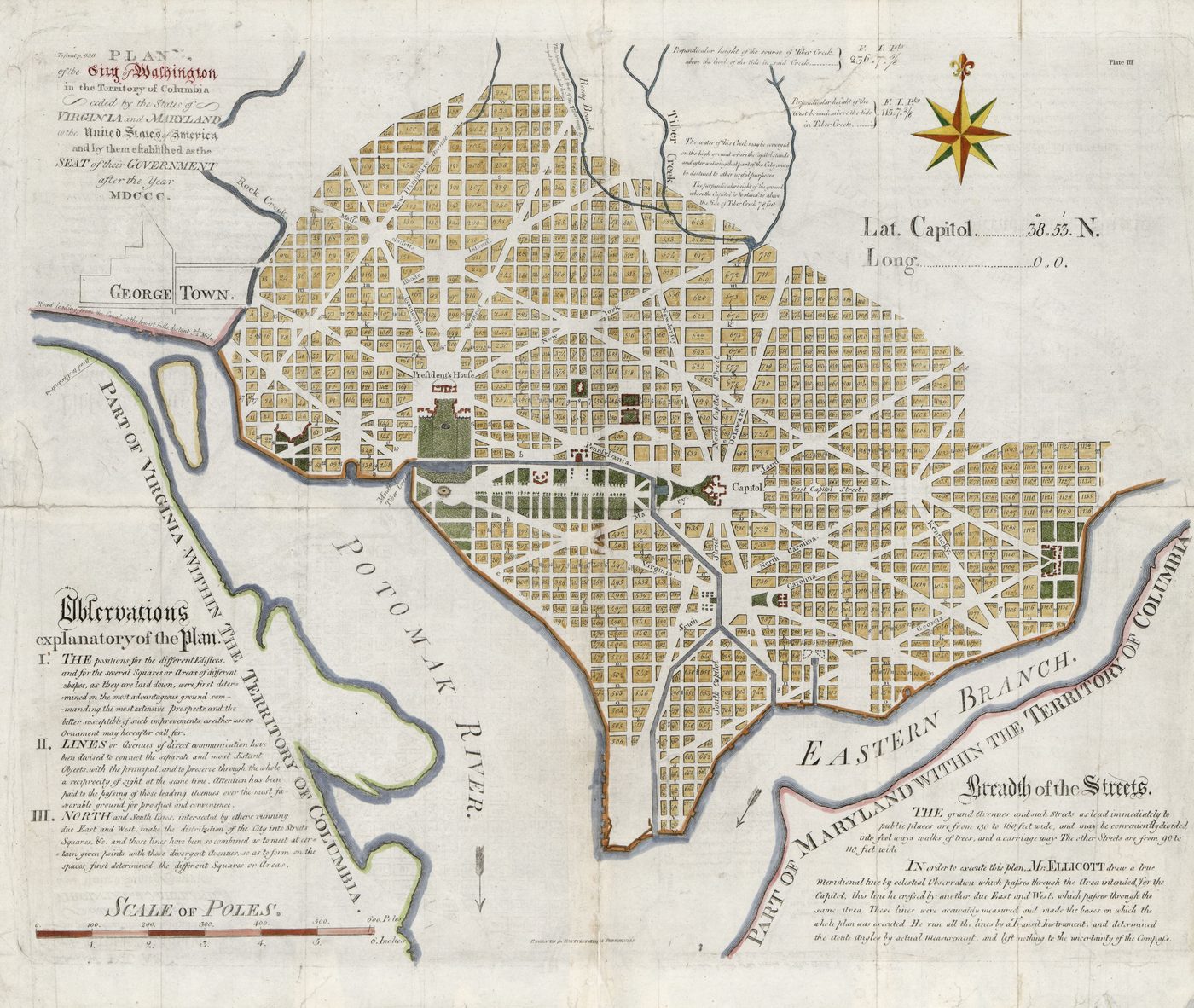
Banneker participated in preliminary federal-district work. That is not the same as designing the capital.
He worked with Andrew Ellicott during an early phase in 1791. Surviving documentation does not establish all of Banneker's day-to-day duties, and no evidence makes him the designer of Washington's street plan.
The record does not make Banneker smaller. It removes claims that can be knocked down easily and leaves achievements that can survive serious scrutiny.
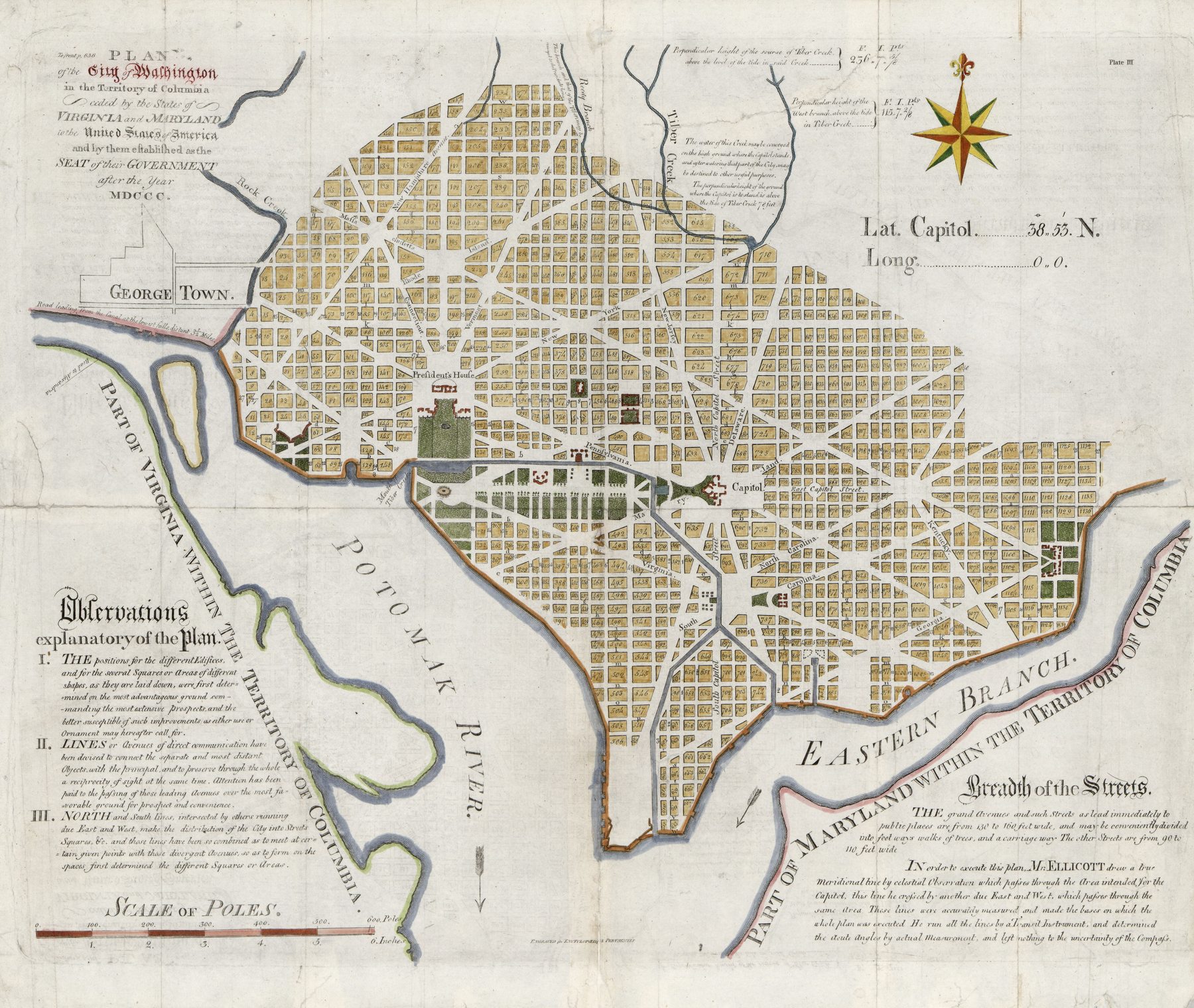
Banneker's documented role belongs to preliminary federal-district work in 1791. The later legend that he designed the city or reconstructed L'Enfant's plan from memory is not supported by the surviving record.
Participation is not authorship.
Andrew Ellicott brought Banneker into the early federal-district project. That connection is real. The exact boundaries of Banneker's duties are much less certain than many modern summaries imply.
The reconstruction legend appeared later and clashes with the chronology: Banneker had returned home before the events to which the story is usually attached. Correcting the myth does not remove him from the history. It puts him back into the part we can defend.
It removes a claim the evidence cannot carry and leaves the documented story stronger: a Black astronomer and calculator participated in the preliminary federal-district project while building the scientific work that would soon make his name public.
Talent still needs a way into the world.
The phrase “self-taught” can hide as much as it reveals. Banneker did extraordinary independent study. He also borrowed books and instruments. People reviewed his calculations. Abolitionist and Quaker networks helped the manuscript find printers. Printers gave the work reach.
None of that makes the mathematics less his. Scientists do not become less scientific because they inherit techniques, consult tables, use instruments or correspond with other people. The more revealing question is why access to help is treated as suspicious when the person was already presumed incapable.
Banneker's almanac joined calculation to an information-and-publishing system. Private study became public reference material. That is part of its technological importance: knowledge was converted into a form that could be reproduced, distributed, checked and used.
George Ellicott's materials gave Banneker tools he did not previously possess.
Waring and Rittenhouse could examine calculations rather than rely on reputation.
Printers and abolitionist networks moved the work into markets and political argument.
The real record is harder to dismiss.
There is a reason legends collect around people like Benjamin Banneker. A history that denied Black achievement created a natural appetite to restore what was erased. The impulse makes sense. Exaggeration still has a cost.
If Banneker has to become the secret designer of Washington in order to matter, his documented astronomy has somehow been declared insufficient. If his wooden clock must be the first in America, the reported mechanical accomplishment is not allowed to stand on its own.
Black history does not need a miracle where the record already gives us work: study begun late in life, calculations that could be checked, published almanacs that survive, correspondence that survives, and a political argument placed beside technical evidence.
More than two centuries later, readers can open those pages themselves. We do not have to inherit the legend. We can inspect the record.
And the record asks a harder question: What happens when a society demands that Black people prove their ability and still retains the power to decide what counts as proof?
Banneker did not solve that problem. No individual could. He did something more concrete. He learned the mathematics, calculated the sky, put the work into print and signed his name.

WHO GETS TO BUILD THE ANSWERS?
Esosa Osa spent years watching information move money, votes and power. With Aisha, she is making a harder bet: that Black people should help determine what artificial intelligence knows before it determines more of what we know.
It ran through systems.
Osa's public path into artificial intelligence did not run through a traditional engineering career. It ran through systems that decide who gets money, power, information and influence.

Markets run on signals, interpretation and access.
What reaches voters — and what never does — changes power.
Propaganda, harmful information and Black digital spaces become the work.
The information layer begins answering back.
On June 16, Esosa Osa put two artificial-intelligence systems through a test that had very little to do with benchmarks. The question was about a son and the police.
Osa asked ChatGPT and Aisha how a parent should talk to a child about encounters with law enforcement. Both systems offered advice. Both recognized that circumstances matter. But Aisha began from a different place: it treated Blackness as part of the context without requiring the user to explain it first.
That distinction can look small on a screen. It isn't.
Osa is the founder and CEO of Onyx Impact, the nonprofit organization that developed Aisha.
Black users of technology are used to supplying the missing paragraph. Explain the history. Explain why the same advice lands differently in one neighborhood than another. Explain why a supposedly neutral answer may not be neutral once race has already altered the conditions of the question.
Aisha was designed to start closer to where those users already are.
During the demonstration, Osa put the premise plainly: “AI reflects whoever built it.”
That sentence is more revealing than most of the language surrounding a new AI product. It doesn't promise neutrality. It questions whether neutrality was ever an honest description of the technology in the first place.
If artificial intelligence becomes one of the main ways people search, learn, work and interpret the world, who gets to establish the assumptions beneath the answers?
Osa has decided that asking somebody else to fix those assumptions is not enough. So she helped build another option.
Not independently of the larger AI industry. Not without outside technology. And not without some of the same difficult questions facing every company that puts a conversational machine between people and information.

The guide became conversational.
Aisha did not appear one summer as a founder's weekend experiment. Onyx had already been building around trusted information and Black digital spaces.
Onyx borrowed the Green Book's idea of trusted navigation. The digital threat is not being equated with the physical danger Black travelers faced under Jim Crow.
She graduated from Duke University, where she and Monique Barrios received Duke's DFE Leadership Award for 2011–2012. Her professional career later included work at Morgan Stanley and BlackRock. From finance, she moved into voting rights and political information, eventually serving as deputy executive director of Fair Fight Action.
On paper, those jobs sit in different worlds. Look longer and the connection sharpens.
Markets run on information before they run on transactions. People act on what they know, what they think they know and what somebody has convinced them to believe. Politics is even less forgiving.
What reaches voters matters. What they trust matters. What never reaches them matters too.
By the time Osa founded Onyx Impact, information itself had become the work.
Onyx describes itself as a nonprofit research, media and technology organization focused on propaganda, harmful information and the health of Black digital spaces. Its 2024 federal tax filing reported roughly $4.25 million in revenue and $3.63 million in expenses, with its reported revenue coming from contributions.
Before Aisha became a standalone application, Onyx had already built the Digital Green Book. The current version of Aisha, launched June 25, 2026, did not arrive from nowhere. It evolved.
Onyx Impact's reported 2024 revenue. The figure establishes institutional scale; it does not measure Aisha revenue, adoption or product success.
Calling it “the Black ChatGPT” is convenient. It is also incomplete.
Aisha is a conversational AI assistant designed to prioritize Black history, reporting, sources and cultural context — with a technical stack that still touches the wider AI industry.

Aisha offers text and voice interaction, Black-history material, news, community resources and tools intended to help users find Black-owned businesses and organizations.
Its legal and technical structure is more layered than the nickname suggests. Aisha's terms identify Aisha AI LLC as the service provider and Onyx Impact as the organization that developed the product. Chromatics AI partnered with Onyx on the technology.
At the June demonstration, Chromatics AI CTO Mohamed Mann said the system uses simulated conversation data supplied by Onyx rather than users' private conversations. He said more complicated questions may be routed through Anthropic's Claude model and that Aisha's web retrieval is designed to prioritize Black media.
Those are the creators' descriptions of the system. BTS has not independently reverse-engineered Aisha's architecture.
TRACE THE ANSWER
Tap a layer. This explainer separates what the product does from what its creators have publicly said about the architecture.
Your question starts the chain.
You type or speak a prompt. The point of Aisha is not that Black users need a different kind of question. It is that the system is designed to begin with more cultural context already available to it.
Aisha can depend on outside models while Onyx still controls important layers such as product design, source choices, contextual framing, user experience and policy. The journalistic question is whether those controlled layers materially change what users receive.
Where the product makes choices
- Product experience and user interface
- Contextual framing and source priorities
- Retrieval behavior and citation presentation
- Data and privacy policies presented to users
Where the stack reaches outside
- Anthropic's Claude for some more complicated queries, according to Aisha's creators
- Third-party AI providers acknowledged in Aisha's Privacy Policy
- Infrastructure and services not independently reverse-engineered by BTS
Who decides what counts as Black context?
Correcting one information imbalance does not eliminate judgment. It moves the judgment somewhere readers should be able to see.

Aisha faces a harder question. What happens when correcting one information imbalance creates another?
Mainstream AI systems have been criticized for racial stereotyping, uneven performance and historical bias. Aisha's response is deliberate: give Black sources and Black context more weight.
The idea is understandable. The execution is not simple.
Black media is not one thing. Black political thought is not one thing. Neither are Black culture, class, religion, geography or history. Two credible Black publications can look at the same event and reach different conclusions.
Osa has been more realistic about that problem than a claim of “bias-free AI” would suggest. In an August interview with Atlanta public radio station WABE, she acknowledged that technology is flawed and biased while arguing that Aisha had been built with protections against misinformation and disinformation.
There is no neutral pile of information waiting for a machine to discover it. People choose what gets collected, labeled, weighted and retrieved.
Aisha's creators say the system prioritizes vetted sources and frequently surfaces citations, particularly from Black news organizations. If that works consistently in practice, it could become one of the product's more important features.
Privacy is part of the credibility test.
Aisha's public Privacy Policy and Terms of Service make meaningful commitments — and they are not worded identically.
What the policy says
- Prompts and conversations are not used for other business purposes or to train or fine-tune Aisha AI.
- Conversations are encrypted, and users can permanently delete their histories.
- Third-party AI providers may process encrypted or hashed prompts to generate responses.
- Feedback can cause the related conversation to be stored with that feedback.
What the Terms also say
- Aisha AI LLC provides the service; the product was developed by Onyx Impact.
- The Terms grant Aisha a license to process submitted Inputs for “providing and improving the Services.”
- The public documents do not, by themselves, explain exactly how the broader Terms language is operationalized alongside the narrower training promise.
That is not an accusation. It is a disclosure readers deserve when privacy is part of the product's identity.
A product aimed at Black users enters a history in which surveillance and data exploitation are not abstract concerns. Promises about privacy therefore carry extra weight.
Aisha's Privacy Policy says prompts and conversations are not used for other business purposes or to train or fine-tune the system. It says conversations are encrypted and that users can permanently delete their histories.
The policy also says third-party AI providers may process encrypted or hashed prompts to generate responses.
And the picture becomes more complicated when the policy is read alongside Aisha's Terms of Service.
The Terms grant Aisha a license to process submitted inputs for “providing and improving the Services.”
The Privacy Policy and Terms are not worded identically. From the public documents alone, BTS cannot determine exactly how those provisions are operationalized together.
That is worth saying plainly. It is not an accusation. It is the kind of distinction users deserve when privacy is part of the product's identity.
Trust grows better under daylight.
Aisha's latest version has been in public hands for only about two months. That is nowhere near enough time to declare victory.
WABE reported in August that Aisha had reached nearly 100,000 users, a figure BTS has not independently verified through product analytics. Other public claims around downloads and daily usage use different metrics, which makes clean comparisons difficult.
The responsible conclusion is simple: Aisha has attracted real attention. The verdict is still open.
We do not yet know whether users will make the product part of their daily lives. We do not know whether its sourcing strategy will consistently produce stronger answers. We do not know how well it will handle disagreement inside the very community it was built to center. And we do not know whether Aisha's dependence on outside AI infrastructure will shrink over time or become a permanent feature of the product.
Those questions are not reasons to dismiss Aisha. They are the price of taking it seriously.

BUILD A COMPANY THAT'S HARD TO KILL
Black founders cannot control every barrier in front of them. They can control how exposed their companies are to one investor, one customer, one platform, one developer—or one bad decision. Here's how to build with fewer points of failure.
You own 80%. Do you own the company?
A cap table tells you who owns the legal entity. It does not tell you who controls the things the business needs to survive.

You own 80% of your startup. Good. Now tell me who owns the GitHub organization. Who controls the cloud account? Whose email is attached to the domain registrar? Who has the recovery codes? Did the contractor who built the product sign an agreement assigning the intellectual property to the company?
A founder can own most of the stock and still discover that somebody else controls half the things the business needs to function. That is one way a startup becomes fragile. One customer can produce most of the revenue. One platform can supply nearly every lead. One investor can stand between the company and payroll.
Black founders have particular reason to think about fragility because the starting conditions are not equal. The Federal Reserve's latest published Survey of Consumer Finances put median 2022 family wealth at about $44,890 for Black families and $285,010 for White families.
Federal Reserve startup research also found large differences in credit outcomes; because that startup comparison groups owners of color together, BTS does not relabel the 53% figure as a Black-only statistic. In the broader employer-firm sample, only 20% of Black-owned applicants reported receiving all the financing they sought, compared with 58% of White-owned applicants.
Compliments do not validate a business. Changed behavior does.
The cheapest credible test is usually worth more than the most polished assumption.

“Would you use an app that automatically handles this?”
“Tell me about the last time this problem happened.”
A founder says, “Everybody I tell about my idea loves it.” That's nice. It is also close to useless. People are generous with opinions when the opinion costs them nothing.
Ask whether someone likes an idea and you may get encouragement. Ask them to change behavior, introduce you to a buyer, run a pilot, sign an agreement or hand you money and the conversation changes.
Don't begin by describing your solution. Ask about the last time the problem happened. What did they do? How long did it take? What did it cost? What have they already tried? Who controls the budget? What happens if nobody fixes it?
Those questions pull the conversation out of imagination and into behavior. There is a large difference between “That's a great idea” and “When can we test it?”
A founder with limited capital cannot afford expensive uncertainty. The most expensive version of entrepreneurship is building the entire product before discovering that the customer never cared enough to buy it.
There will also be times when the system made the road harder—and times when you simply priced badly, hired badly, spent too early, ignored the customer or signed something you did not understand. Learn to tell those situations apart.
“Pretty good” is not a financial metric.
A founder does not need an MBA to know the numbers capable of killing the business.
Now the useful questions begin. Can you realistically sell 1,000 units? How long will that take? What will acquiring those customers cost? What happens if delivery cost rises from $30 to $45? What if the market will pay $125 instead of $100?
Pricing is not simply a confidence exercise. “Charge what you're worth” sounds good online. The business still has to work mathematically.
Revenue can make a company look healthy while its bank account tells a different story. Imagine winning a $200,000 contract, hiring people to perform the work, then discovering the customer pays 60 days after an approved invoice. The big win just created a working-capital problem.
Stop asking, “Where can I get money?”
Ask the question that forces strategy: What job does the money need to do?
Revenue
When customers can fund growth, revenue brings cash without selling ownership. It also creates an obligation to deliver—and rapid growth can still create a working-capital gap.
Money is not interchangeable. Debt has payments. Equity has dilution. Grants have eligibility rules. Customer revenue comes with delivery obligations. Personal savings carry personal risk.
SBA Microloans can reach $50,000, with the average around $13,000. SSBCI is a nearly $10 billion Treasury initiative delivered through states, territories and Tribal governments; actual programs vary by jurisdiction.
NSF's current SBIR/STTR solicitation allows Phase I requests up to $305,000 and Phase II up to $1.25 million for qualifying R&D. Regulation Crowdfunding can allow eligible issuers to raise up to $5 million in a rolling 12-month period through the required registered intermediary.
Venture can be powerful. Depending on venture capital to validate whether your company deserves to exist is something else entirely.
Need → capital categories worth investigating
Fast money can still be useful. Understand what it costs.
When payroll is approaching, “funded tomorrow” can sound cheaper than it is.

The most dangerous financing offer often appears when the founder is tired enough to stop asking questions. Sales are late. Payroll is approaching. The bank said no. Then somebody says the money can be in your account tomorrow.
Maybe the financing is appropriate. Maybe it is terrible. Speed does not answer that question.
The Federal Reserve's latest employer-firm survey found that 60% of firms borrowing from online lenders said the actual cost was higher than expected. That does not mean every online lender is a bad choice. It means price transparency matters.
Small-bank applicants in that same survey had the highest reported full-approval rate at 57%. Again, not a guarantee. A reminder that lender selection is strategy.
A rejection from one institution is not the same thing as the entire credit market declaring your business unfinanceable. Compare lender types, total economics, guarantees, repayment timing and the effect on cash—not only the speed of approval.
Money can buy time. It cannot buy proof that anybody wants what you sell.
Equity is money you cannot earn back.
The mistake is not dilution. The mistake is signing away ownership you never modeled.

Debt is obvious. The payment leaves the bank account every month. Equity is quieter. You sign documents. Everybody celebrates. The company's bank balance goes up. Your percentage goes down.
That is not automatically a bad trade. If selling part of the company helps turn a $1 million business into a $100 million business, the smaller percentage may be worth far more.
Take a simplified post-money SAFE example. Five investors each invest $100,000 at a $5 million cap. Together, the $500,000 represents roughly 10% before considering other SAFEs, an option pool or later priced financing.
This is why founders raising equity should maintain a fully diluted cap table. Model the outstanding SAFEs. Model the option pool. Model promised equity. Model the next round.
Not: “I think I still own around 70%.”
Know.
YC's own post-money SAFE materials use this same five-$100K-at-$5M example to show how multiple SAFEs add up. The math is simple enough to understand before the signature.
Make the company own the company.
If one contractor can lock you out of the code, domain, cloud or payments, you have a dependency—not control.

Stock ownership tells you who owns the legal entity. Operational ownership tells you whether that entity controls what it needs to operate. Those are not automatically the same thing.
The company should control the domain registrar, DNS, source-code repositories, cloud/hosting, database, payment processor, app-store accounts, analytics, administrative email, password manager, recovery codes, customer systems, contracts, backups, critical documentation and intellectual property.
And do not assume that paying a contractor automatically settles ownership. U.S. Copyright Office guidance makes clear that work-made-for-hire rules for independent contractors are narrower than many founders assume.
For contractor-built technology, use a properly drafted written agreement that addresses intellectual-property assignment and the company's rights in the deliverables. Existing code, third-party components, open-source software, credentials, repositories, documentation and departure should be addressed too.
Thirty days is thirty days.
Founders do not need to become tax attorneys. They do need to know which questions have deadlines.

If a founder receives substantially nonvested property—often founder stock subject to vesting—an 83(b) election may be relevant. Current IRS rules generally require the election to be filed no later than 30 days after the property is transferred.
Whether the election is appropriate depends on the founder's facts. The founder's job is not to become a tax lawyer. It is to know the 30-day clock exists soon enough to ask the right person the right question.
Entity choice deserves the same respect. A venture-backed company expecting institutional investors and employee equity may need a different structure from a two-person consultancy that intends to distribute profits.
Current Section 1202 guidance includes a $75 million gross-assets test for qualifying stock issued after July 4, 2025, but that threshold is only one part of potential Qualified Small Business Stock treatment. Forming a C corporation does not automatically make founder stock QSBS.
And stale checklists can become legally wrong. As of August 14, 2026, FinCEN's final rule exempts U.S.-created companies from federal BOI reporting requirements; certain foreign entities registered to do business in the United States remain subject to the regime.
Do not rent your entire customer base.
Platforms are useful. Dependence is the problem.

Rented
- TikTok
- Marketplace
- App store
Convert
- Visit
- Subscribe
- Create account
- Purchase
- Refer
- Return
Owned relationship
- CRM
- Customer account
- Community
- Referral path
- Direct return
Instagram can be useful. LinkedIn can be useful. TikTok, Google, Amazon, app stores and marketplaces can all be useful. None of those platforms belong to you.
A company can build a large audience and still discover that somebody else controls access to nearly everyone in it. An algorithm changes. Organic reach falls. Search rankings move. A marketplace changes its fees. Now what?
The answer is not to abandon platforms. That would be foolish. The answer is to use rented distribution to build owned relationships.
Someone discovers you on TikTok. Fine. Can they join your email list? Create an account? Become a customer? Refer someone? Return directly? Can the company maintain that relationship in its own CRM with appropriate consent?
For B2B companies, owned distribution can look even less glamorous. A list of 150 qualified buyers can be more valuable than 50,000 unrelated followers. Know the names. Know the companies. Know the problem. Know who controls the budget.
The Federal Reserve's latest survey found that reaching customers and growing sales was the most commonly reported operational challenge among employer firms.
Build a network that does something.
The value is not in how many people know your name. It is in what knowledge and access the relationships make possible.

“Can I pick your brain?”
“You sold software into hospital systems. For a workflow product used by nurses, who normally owns the budget?”
A useful network has jobs. Buyers can explain purchasing. Operators have already paid for mistakes you are about to make. Technical people can challenge architecture and security decisions. Capital people understand financing. Connectors can open credible doors into all four groups.
Specific questions reduce the cost of helping you. “Can you mentor me?” asks somebody else to define the relationship. “You raised an SBIR award. At what point did you know your technology was mature enough to apply?” gives them something real to answer.
A useful network is not a room full of business cards. It is access to knowledge you would otherwise have to acquire the expensive way.
Use AI aggressively. Verify it aggressively.
Small teams can now operate with leverage that once required far more people. The tools still make mistakes.

The Federal Reserve's latest survey found that 46% of employer firms reported already using AI for work. Among firms using it, 83% reported using AI for writing or marketing, 61% for individual productivity and 51% for planning or analysis.
Use the tools. Check the work. AI can help with research, code scaffolding, testing, documentation, analysis, sales preparation, support triage, prototypes and repetitive administrative work.
But do not ask AI whether customers want your product instead of asking customers. Do not put sensitive customer information into tools the company has not approved for that data. Do not ship generated code you do not understand into a sensitive production system.
Use AI to reduce the cost of iteration. Never use it to avoid reality.
What can end your company by itself?
Check every statement that is currently true. This is a dependency finder—not a scientifically validated survival score.
No checked dependencies yet. Use the audit honestly; the value is identifying what to work on, not earning a flattering label.
- No risks selected.
Stop thinking like the founder for ten minutes. Think like the thing trying to break the business.
Your biggest customer leaves. Your investor says no. Instagram sends zero traffic. The lead developer quits. The bank rejects the application. A cofounder leaves. Customers reject the feature. Sales slow down.
The purpose is not paranoia. It is discovery. Find dangerous dependencies while you still have time to change them.
A company becomes stronger each time one catastrophic dependency becomes two or three workable options. Not invincible. Stronger.
The goal is not to eliminate risk. The goal is to stop one dependency from having the power to end the whole company.
Black founders do not need another speech about resilience.
Building a company already requires enough of it. What founders need is leverage—and a place to start.